
Education
What to actually look for on your certificate
The certificate that arrives with your piece isn't decoration — here's what to actually look for on it.
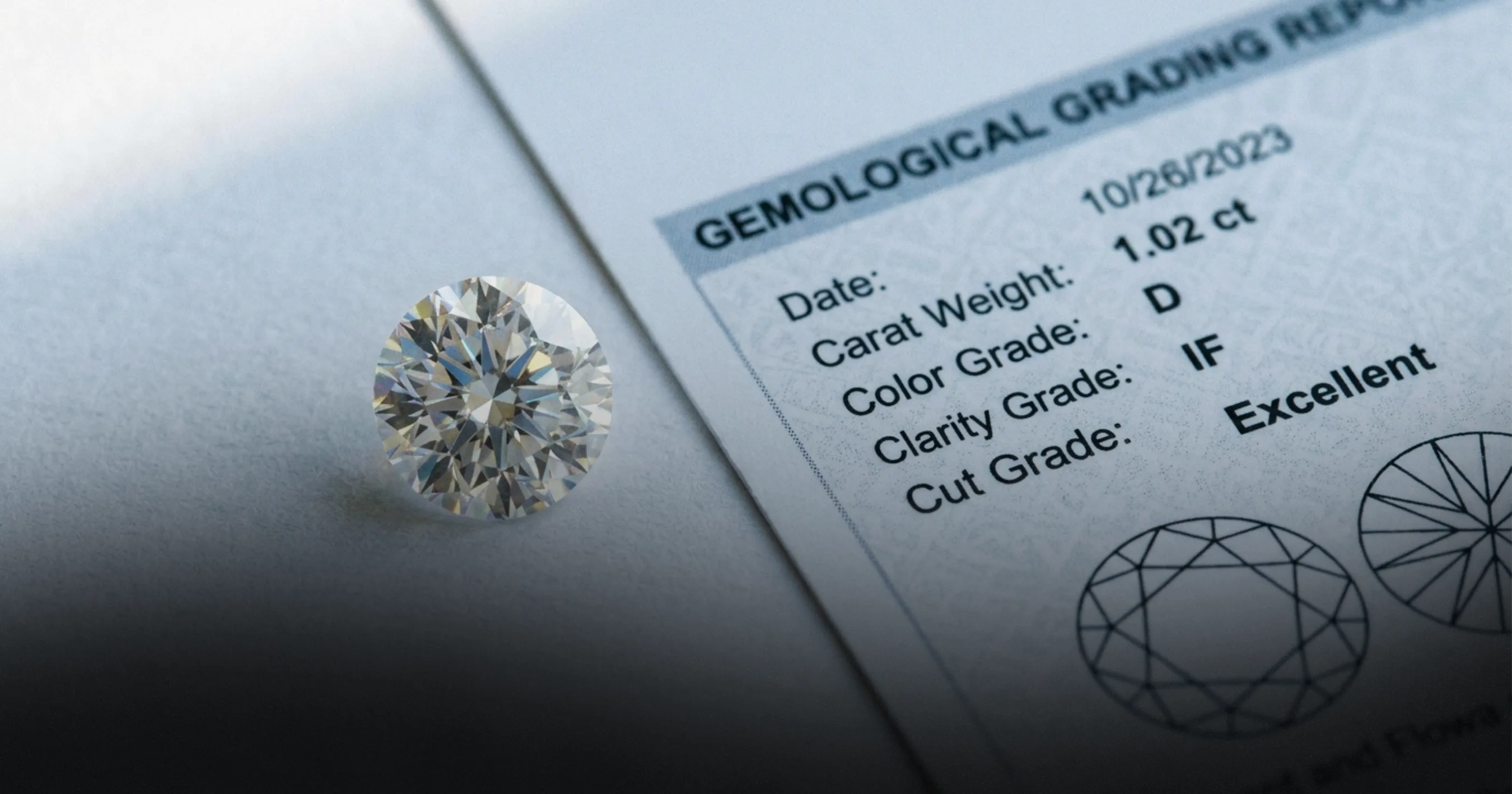
When your piece arrives, the certificate is easy to set aside and never look at again. Worth a few minutes the first time, though, because it's the one document that describes exactly what you own.
Look for the grading first — cut, colour, clarity and carat for a diamond, or the equivalent for a coloured stone — and then the origin line, which is where a lab-grown stone is identified as such. Everything on the certificate is a description of the stone itself, not of us.
Keep it somewhere you'll find it again. It's the document an insurer or a future valuer will ask for, and it travels with the piece, not with your order history.
Read more on Learn: What a Diamond Certificate Actually Tells You | Aurea
Theo Lindqvist
Writes about stones, for Aurea
Theo answers the questions people ask before they buy — about origin, certification, and what a stone actually is. He'd rather a piece read plainly than impressively.
The 4Cs, Explained Simply: Cut, Colour, Clarity, and Carat
A clear, calm guide to the 4Cs of diamonds — cut, colour, clarity, and carat — and how they apply equally to lab-grown stones. From Aurea.
How to Find Your Ring Size at Home
A calm, practical guide to measuring your ring size at home using string, paper, or a ring you own — plus how Japanese sizing differs.