
Guides
What “Made to Order” Means — and Why It's Worth the Wait
Made to order means your Aurea piece is crafted only once ordered, about 20 days, then dispatched from Singapore with tracking to Japan and worldwide.
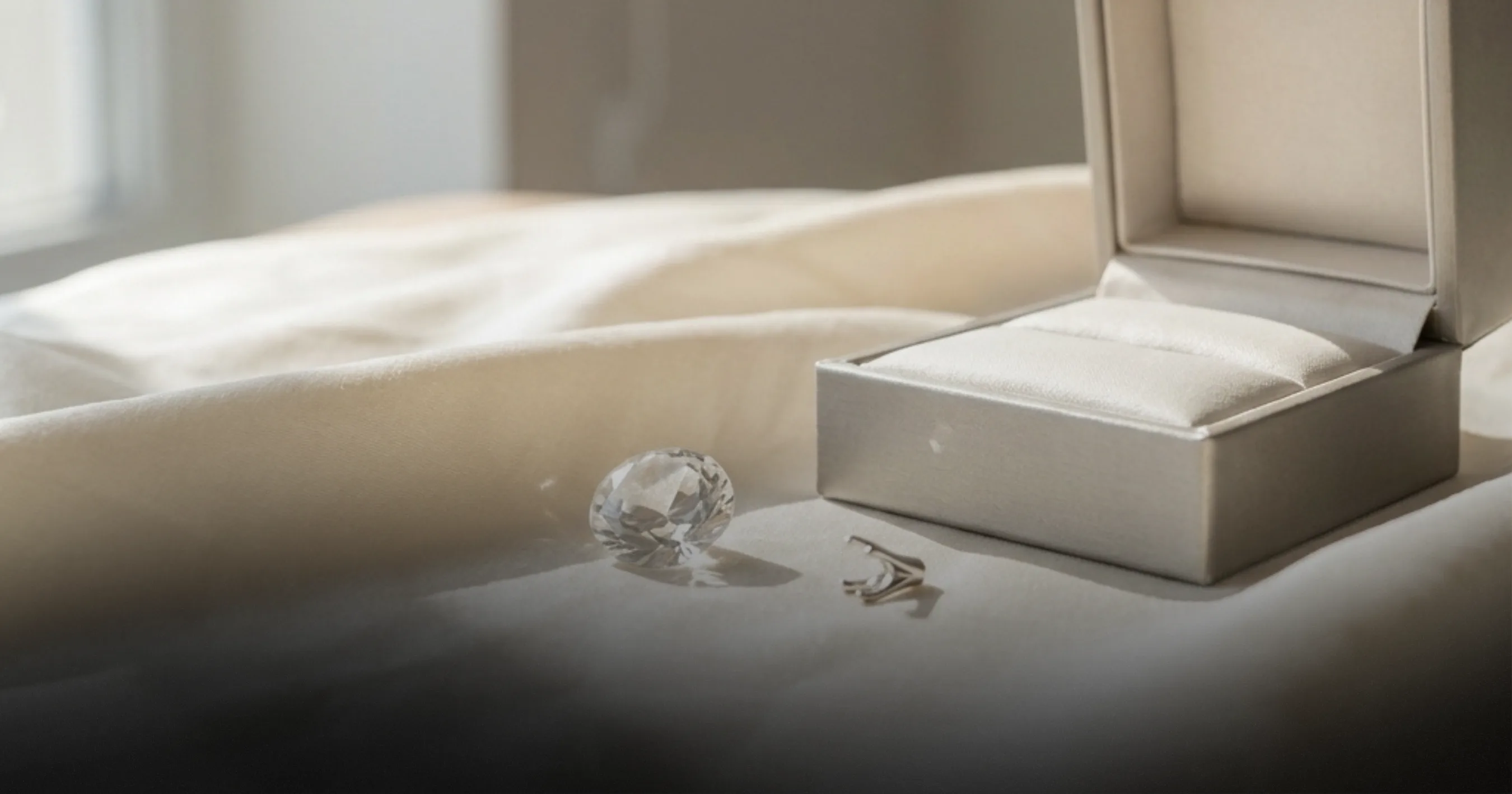
Most jewellery photography implies readiness. A piece sits polished under studio light, apparently complete, waiting only for someone to notice it. At Aurea, that image is honest about the finished result but slightly misleading about the process behind it: when you place an order, the piece you have chosen does not yet exist. It is made only once you have asked for it — a decision that shapes almost everything else about how Aurea works, from the timeline you are given at checkout to the reason there is a timeline at all.
This is what “made to order” means in practice, and it is worth explaining plainly, because a wait of roughly twenty days can feel, at first glance, like something to tolerate rather than something to value. It is, in fact, the opposite: evidence that a piece is being made specifically for you, not selected from a shelf of identical pieces made in the hope that someone, eventually, would buy one.
What “Made to Order” Actually Means
In manufacturing terms, made to order — sometimes shortened to make-to-order, or MTO — describes a straightforward idea: production begins only after a customer places an order, rather than in advance of one (Mecalux, n.d.). It sits opposite a make-to-stock model, in which items are produced ahead of demand, based on a forecast of what is likely to sell, then held in inventory until a buyer appears.
Why Nothing Sits in a Drawer
The alternative to made-to-order is not neutral. A make-to-stock model has to guess at demand, and guessing at scale produces surplus almost by design: pieces made because they might sell, not because they will. Across fashion and adjacent goods industries, that guesswork carries a well-documented cost. The Ellen MacArthur Foundation, a leading authority on circular-economy thinking, notes that the current linear model across clothing and related goods results in the equivalent of a rubbish truckload of clothing being burnt or buried in landfill every second (Ellen MacArthur Foundation, n.d.) — a scale of waste that starts, in large part, with producing more than is ever actually bought.
Fine jewellery is a smaller, slower-moving category than fast fashion, but the underlying logic is the same: anything made speculatively is at risk of being made unnecessarily. A made-to-order model removes that risk at the source. Aurea produces one piece because one person ordered it — not a dozen in a hopeful range of sizes, not a stockroom of “popular” styles kept ready in case they are needed. Nothing sits in a drawer. Nothing is made and then discounted, broken down, or quietly written off because it never found a buyer.
Grown, Not Mined — the Other Half of Intention
This same intention runs through Aurea's stones, not only its production schedule. Every diamond and every coloured gemstone in the collection is grown in a laboratory rather than mined from the ground. The Gemological Institute of America (GIA), the standard-setting authority on gemstone grading and identification, states plainly that a laboratory-grown diamond has “essentially the same chemical, physical and optical properties as its natural counterpart” (GIA, n.d.) — the material itself does not change because of where it formed; only its origin does.
That origin matters because mining, even when done responsibly, is not a light process. McKinsey & Company's research into sustainability in fine jewellery estimates that for every carat of mined diamond, an estimated 250 metric tons of earth are moved (McKinsey & Company, 2021) — a striking figure, and one that helps explain why a growing share of jewellery buyers now weigh origin as part of the decision rather than an afterthought; the same research projected that sustainability-influenced purchases would account for 20 to 30 percent of all fine-jewellery sales by 2025. Choosing lab-grown removes that extraction step entirely, and pairing it with made-to-order production removes the other source of unnecessary waste: pieces made before anyone has asked for them. Together, the two decisions describe the same underlying value — nothing is taken from the ground, and nothing is made, unless it is actually going to be worn.
What the Wait Is Actually For
None of this makes twenty days pass more quickly, and Aurea would rather explain the wait honestly than pretend it isn't there. That period is where a design, chosen from the collection or discussed in a consultation, becomes a specific, physical piece — one with your stone, your size, your metal choice, made once, for you. It is a different kind of attention to buying something already finished and sitting in stock, and it takes a comparable amount of care to the piece you're hoping will last well beyond the day you receive it.
It helps to think of the timeline less as a delay and more as a fact about how the piece is being made. A ready-to-ship item can arrive quickly because it was already finished before you asked for it — which is precisely what made-to-order avoids. The wait is the trade-off for that avoidance, and it is a trade Aurea considers worth making.
Setting Expectations: Timeline and Delivery
In practical terms: production takes approximately 20 days from the point an order is confirmed. Once a piece is finished, it is dispatched from Singapore with tracking, to Japan and worldwide, so you can follow its progress rather than simply wait without word. There is no separate, faster “in-stock” option to switch to partway through, because there is no in-stock option at all — every piece, whichever style or stone, follows the same made-to-order path.
If you are ordering with a particular date in mind — an anniversary, a milestone, a Mother's Day gift — it is worth building that twenty-day window, plus shipping time, into your planning, rather than ordering the week of the occasion itself. A short consultation beforehand is often the easiest way to do this with confidence: a jeweller can talk you through realistic timing for your specific date, so the making happens comfortably ahead of it rather than against the clock.
Making the Wait Part of the Experience
The decisions that take the most time are usually made before an order is placed, not after — which is where Aurea's other tools are most useful. Find Your Piece, a short five-question quiz, helps narrow a choice by occasion, personality, or budget before you commit to one. A Wishlist lets you save pieces while you decide, with nothing expiring and nothing reserved, so there is no pressure to choose faster than feels right. And if you would simply like to talk it through, a complimentary consultation puts a jeweller alongside you for that decision, with no obligation attached.
Once an order is placed, the wait that follows is a quieter, more settled kind of anticipation — closer to knowing a piece is being made for you than wondering if it exists at all.
A Closing Note
“Made to order” is, in the end, a fairly simple idea dressed up in unfamiliar language: nothing is made until it is wanted. At Aurea, that principle shapes the timeline you're given, the stones set into every piece, and the absence of a stockroom behind the scenes. The twenty days between your order and your piece arriving are not an inconvenience to be minimised. They are the space in which something is made specifically for you, rather than pulled from a shelf of pieces made for no one in particular.
If you are ready to begin, browse the collection to find a style that suits you, or book a complimentary consultation to talk through timing, stone, and size with a jeweller directly — at whatever pace feels right.
Frequently Asked Questions
What does “made to order” mean for jewellery?
It means a piece is manufactured only after a customer places an order, rather than being produced in advance and held as finished stock. At Aurea, every style is made this way — nothing is pre-cast or pre-set before it is ordered.
How long does a made-to-order piece from Aurea take to arrive in Japan?
Production takes approximately 20 days from order confirmation. Once complete, the piece is dispatched from Singapore with tracking, to Japan and worldwide, so you can follow its progress after it ships.
Is made-to-order jewellery more sustainable than buying from stock?
It reduces one specific source of waste: pieces made speculatively, in case they sell, rather than because someone has actually ordered them. Combined with Aurea's lab-grown stones, which avoid mining altogether, it means nothing is made or taken from the ground unnecessarily.
Can I see or try a piece before it's made?
You can explore detailed images by style and stone on each product page, use Find Your Piece to narrow your options, and speak with a jeweller during a complimentary consultation before you order. Once you're confident in your choice, production begins.
Should I order ahead of a specific occasion, like an anniversary or Mother's Day?
Yes. Because production takes about 20 days plus shipping time, it is worth ordering ahead of the date rather than the week of it. A consultation beforehand can help you plan realistic timing for a specific occasion.
Mira Oduya
The 4Cs, Explained Simply: Cut, Colour, Clarity, and Carat
A clear, calm guide to the 4Cs of diamonds — cut, colour, clarity, and carat — and how they apply equally to lab-grown stones. From Aurea.
How to Find Your Ring Size at Home
A calm, practical guide to measuring your ring size at home using string, paper, or a ring you own — plus how Japanese sizing differs.