
Learn
Fine Jewellery Warranty and Care Explained | Aurea
A calm guide to how fine jewellery warranties work, why your certificate and receipt matter, and how Aurea supports your piece long after it arrives.
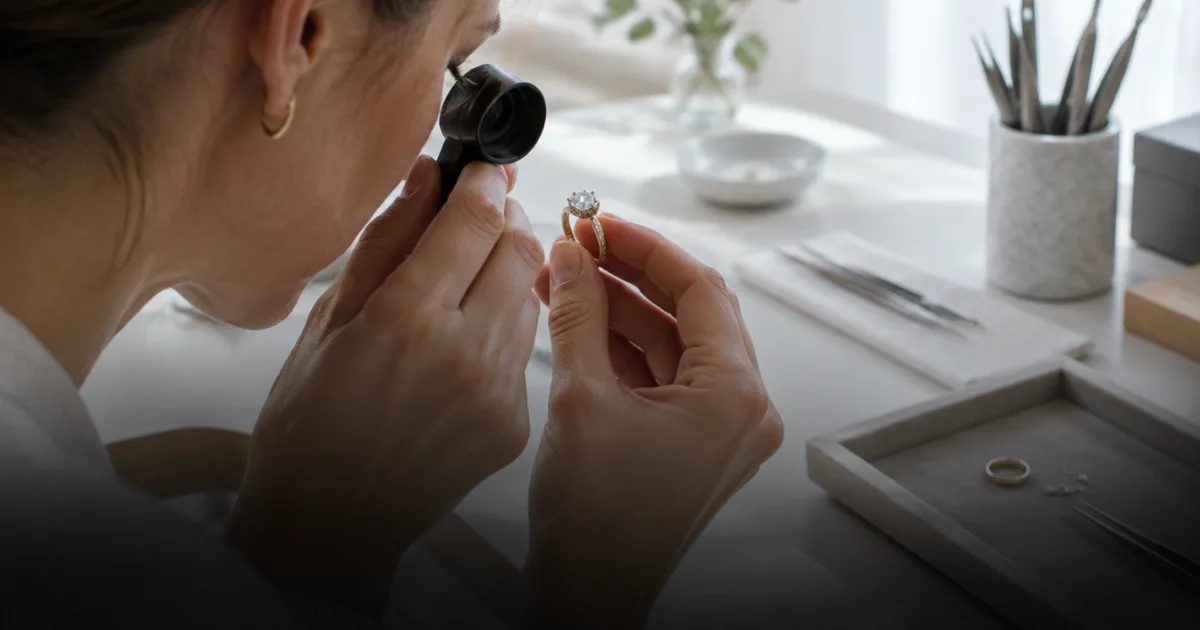
Buying a piece of fine jewellery online is, in one sense, the end of a decision — the stone chosen, the metal confirmed, the size settled. In another sense, it's the start of a longer relationship: one that runs from the day a piece arrives through years, sometimes decades, of everyday wear. A warranty is the part of that relationship that gets written down — what a jeweller has promised to stand behind, and what falls outside that promise. It's worth understanding clearly, not because anything is likely to go wrong, but because knowing what's covered, what isn't, and what to keep safely on hand makes the years after a purchase feel as considered as the purchase itself.
What a Warranty Is Actually For
A jewellery warranty exists to cover a fault in how a piece was made, not a fault that appears from wearing it. That distinction sounds simple, but it's the one most buyers haven't thought through before they need it. A warranty is a manufacturer's or retailer's promise about the quality of construction — that a setting was soldered correctly, that a clasp was assembled properly, that a prong was cut and shaped to hold its stone securely (BriteCo, n.d.). It isn't a promise that a piece will look the same after years of daily wear, travel, and the ordinary knocks of a life lived in it. Understanding that distinction from the outset is what makes a warranty useful rather than a source of disappointment later.
What's Typically Covered
At Aurea, every piece is inspected before it ships. If a fault appears under normal wear within the warranty period, the process is straightforward: contact us, and we'll repair or replace it. In practice, that generally means faults traced back to how a piece was constructed rather than how it's been worn — a setting that loosens because of how it was originally secured, a clasp that fails without having been dropped, snagged, or forced, or a stone that comes loose for reasons unrelated to an accidental knock. These are the kinds of issues a warranty is designed to catch: the ones that point back to the making of the piece, not to the life it's been living on someone's hand.
What's Typically Not Covered
Three categories generally sit outside warranty coverage, and it's worth naming them plainly rather than leaving them vague.
Normal wear. Metal thins where it rubs against a desk, a steering wheel, or another ring, worn day after day; prongs that once sat flush eventually soften and need re-tipping; a polished surface picks up fine scratches over years of use. None of this reflects a fault — it's simply what wearing fine jewellery for years does, and it's why a warranty and ordinary maintenance are two different things (BriteCo, n.d.).
Accidental damage. A ring caught on a doorframe, a bracelet dropped onto a hard floor, a pendant clasp forced open in a hurry — these events happen to careful owners too, but they aren't manufacturing faults, and a warranty was never designed to absorb them.
Improper care. Chlorine, household bleach, and everyday chemicals in cleaning products and some cosmetics can pit or discolour gold alloys and damage certain gemstones over time (GIA, n.d.). Wearing a piece into a swimming pool, a hot tub, or while cleaning the house is one of the more common ways a piece is affected — and it falls under care, not construction.
None of this is a technicality designed to avoid responsibility. It's simply an honest line between what a jeweller controls — how a piece is made — and what happens to it afterwards, which is largely in the wearer's hands.
Warranty and Insurance Aren't the Same Thing
The two are easy to conflate, but they solve different problems. A warranty is a maker's promise about construction quality, typically covering manufacturing defects and excluding wear and tear, accidental damage, and loss (BriteCo, n.d.). Insurance covers the opposite set of risks — loss, theft, and accidental damage — and, in most policies, excludes manufacturing defects, since a warranty already exists for that (BriteCo, n.d.). For a piece bought primarily for oneself and worn regularly, rather than kept for occasions, the two are genuinely complementary: a warranty stands behind how it's made, and a separate jewellery insurance policy stands behind what might happen to it in daily life — a helpful thing to consider for pieces significant enough to warrant it, and worth discussing with an insurer directly rather than assuming home contents cover applies in full.
Why Your Certificate and Receipt Matter
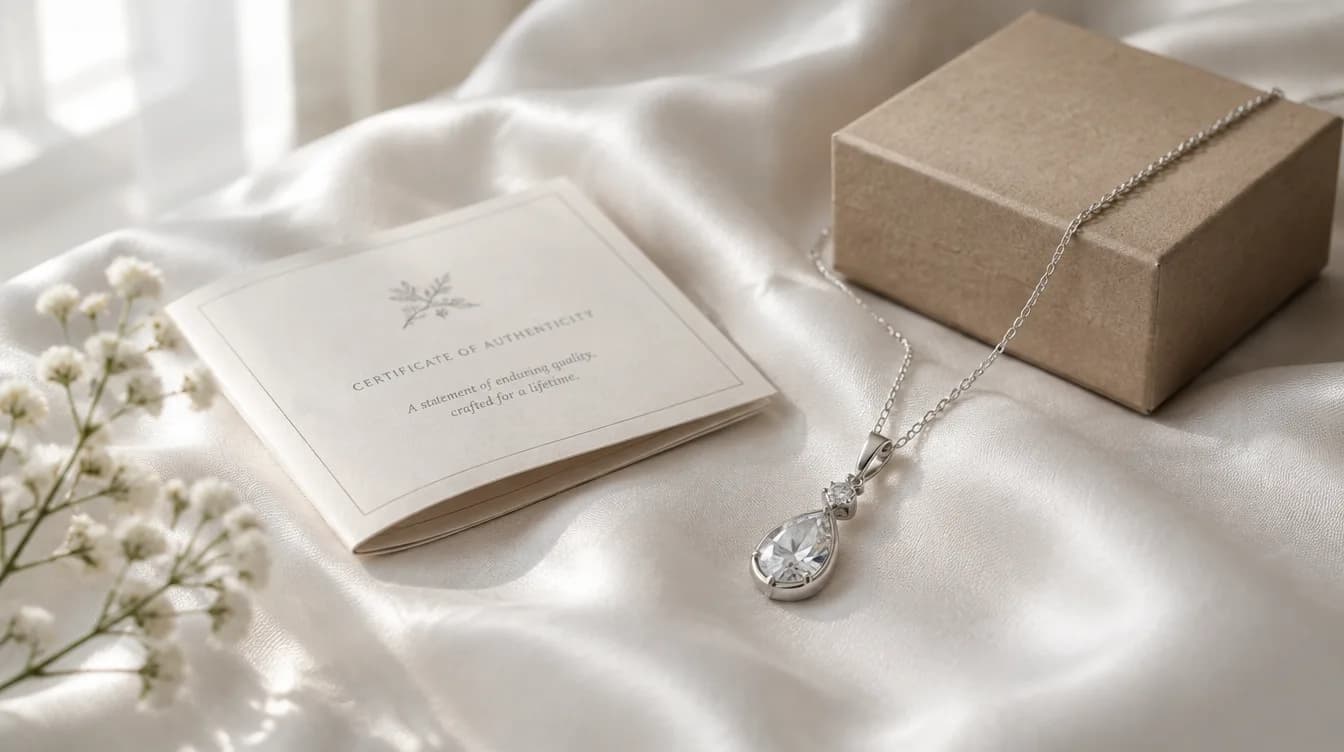
Every stone at Aurea is certified. That certificate, together with the receipt confirming the order, is the documentation that makes almost everything afterwards easier — a warranty claim, an insurance appraisal, or simply confirming exactly what was purchased years later. Jewellers Mutual, a specialist in jewellery insurance, advises bringing precisely this kind of paperwork to an appraisal: "a sales receipt, previous appraisals, or laboratory certificates," since it helps establish an accurate, well-supported valuation (Jewelers Mutual, n.d.). The same documentation is what a jeweller will ask for first if a warranty question ever comes up, since it confirms the date of purchase and exactly what was bought. Truthful, accurate representation of a piece — its materials, its stones, its origin — is also a standard the jewellery industry is expected to meet under U.S. federal consumer protection guidance (Federal Trade Commission, n.d.), which is one more reason a certificate is worth treating as a permanent record rather than paperwork to file away and forget.
A simple habit is enough: keep a digital copy of the certificate and receipt somewhere easy to find — a dedicated folder or note — alongside a printed copy with the piece itself, and a photograph of the item as it arrived. None of this takes more than a few minutes, and all of it is far easier to do on the day a piece arrives than to reconstruct years later.
Caring for a Piece Between Now and Always
Good care is mostly a matter of habit rather than effort. A few practices, followed consistently, do most of the work of keeping a piece looking the way it did on the day it arrived.
Take it off for the rough parts of the day. Swimming, cleaning, gardening, exercise, and applying lotion, perfume, or sunscreen are among the most common ways fine jewellery is dulled or damaged, since chemicals and physical knocks do more harm than almost anything else (GIA, n.d.; Jewelers of America, n.d.).
Wipe it after wearing it. A soft, dry cloth after each wear removes the everyday residue of lotion and skin oils before it has a chance to build up (Jewelers of America, n.d.).
Store pieces separately. A soft pouch or a lined box compartment keeps stones and metal from scratching each other when pieces are kept loose together.
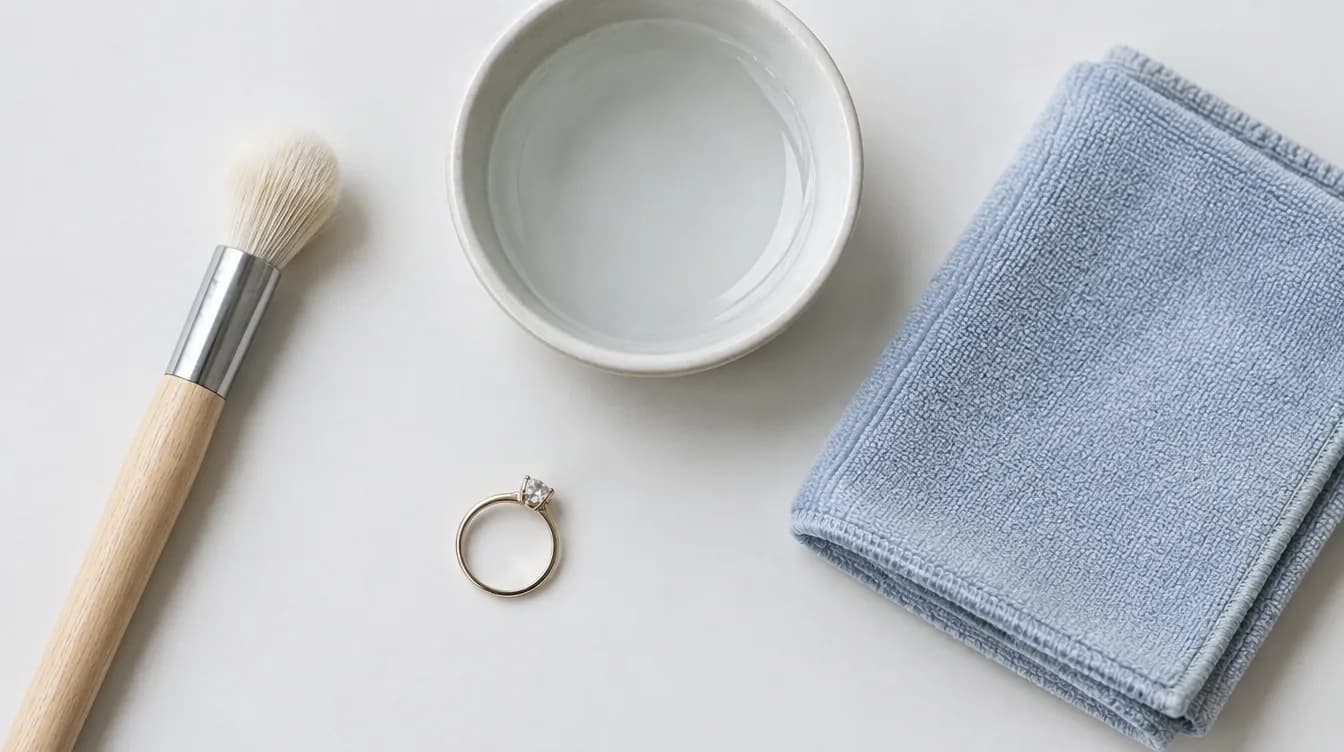
Clean gently and only when needed. Warm water, a mild soap, and a soft brush are enough for most fine jewellery; ultrasonic cleaners aren't suitable for every stone, so it's worth checking before using one (GIA, n.d.).
Have it looked at periodically. A jeweller can check that a setting is still secure and a clasp still sound well before either becomes a problem — a brief, worthwhile habit roughly twice a year (GIA, n.d.).
How Aurea Supports the Relationship After the Sale
Every Aurea piece is inspected before it leaves the workshop in Singapore, certified, and made only once it's ordered — nothing is pulled from a stockroom shelf. If a fault appears under normal wear within the warranty period, the path forward is a simple one: contact us, and we'll repair or replace it, in line with the warranty terms set out at checkout and in our Terms of Service. That's a starting point rather than the whole of it. Because we see ourselves as jewellers first, the relationship doesn't end at the warranty's edge — questions about cleaning a specific stone, resizing a ring as life changes, or simply wanting a second opinion before attempting a repair yourself are exactly the kind of thing worth asking us about, whether or not a piece is still within its warranty period.
A Relationship, Not Just a Purchase
A warranty is a narrower promise than most people expect — and that's not a weakness, it's honesty about what a jeweller can reasonably guarantee about their own work. Everything else — the daily habits of care, the certificate kept safely, the occasional check-up — is what actually keeps a piece looking the way it did on the day it arrived, for the years that follow.
If you have a question about caring for a specific piece, or you'd simply like to talk through what's covered before or after you order, book a complimentary consultation and a jeweller will talk it through with you directly — no pressure, no obligation. The Education section carries the same straightforward approach applied to certification and the difference between lab-grown and mined stones, if you'd like to read further.
Frequently Asked Questions
What does a fine jewellery warranty typically cover?
A fine jewellery warranty typically covers manufacturing faults — issues traced back to how a piece was made, such as a setting or clasp that fails without having been dropped, forced, or otherwise mishandled. At Aurea, every piece is inspected before it ships, and if a fault appears under normal wear within the warranty period, we repair or replace it.
What isn't covered by a jewellery warranty?
Normal wear (such as thinning prongs or surface scratches after years of use), accidental damage (a knock, a drop, a caught clasp), and improper care (exposure to chlorine, household chemicals, or harsh cleaning) generally fall outside warranty coverage, since none of these point to a fault in how the piece was made.
Is a jewellery warranty the same as jewellery insurance?
No. A warranty is a maker's promise about construction quality and typically excludes wear and tear, accidental damage, and loss. Jewellery insurance covers the opposite — loss, theft, and accidental damage — and generally excludes manufacturing defects, since a warranty already covers those.
Why should I keep my jewellery certificate and receipt?
A certificate and receipt confirm exactly what was purchased and when, which makes warranty claims, insurance appraisals, and any future authentication far simpler. Insurers commonly ask for this documentation directly when appraising a piece for coverage.
How often should fine jewellery be professionally checked?
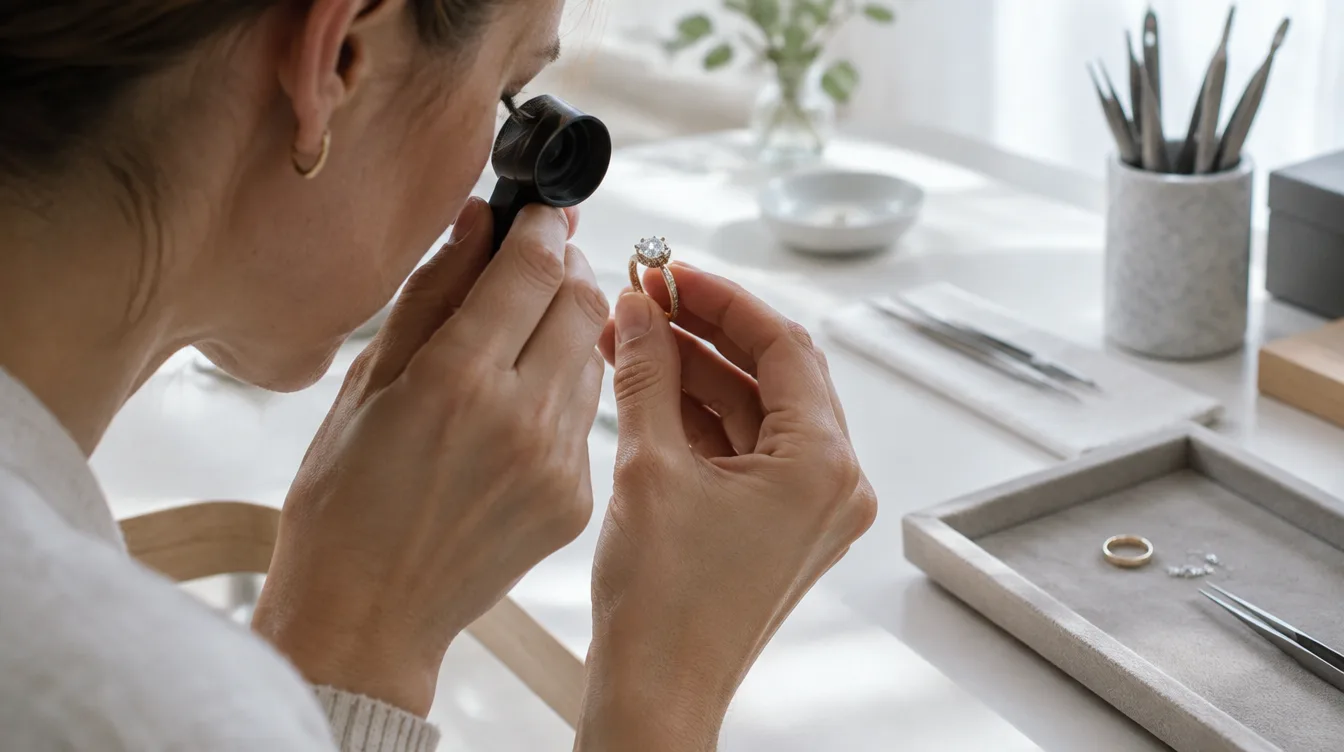
Roughly twice a year is a reasonable habit for most fine jewellery, so a jeweller can confirm a setting is still secure and a clasp is still sound before either becomes a genuine problem.
Theo Lindqvist
Writes about stones, for Aurea
Theo answers the questions people ask before they buy — about origin, certification, and what a stone actually is. He'd rather a piece read plainly than impressively.
Is a Lab-Grown Diamond a Real Diamond? The Honest Answer
Same carbon, same hardness, same fire. See what the FTC, GIA, and IGI actually say about lab-grown diamonds, and why Aurea sets only grown, certified stones.
How Lab-Grown Diamonds and Gemstones Are Made | Aurea
How lab-grown diamonds and coloured gemstones are grown, not mined: HPHT, CVD, and hydrothermal methods explained plainly, with sourcing from GIA and IGI.
Gemstone or Diamond? How to Decide What's Right for You
Choosing between a gemstone and a diamond? Both are real, both are certified. A calm guide to deciding by colour, occasion and meaning, from Aurea.