
Education
Is a Lab-Grown Diamond a Real Diamond? The Honest Answer
Same carbon, same hardness, same fire. See what the FTC, GIA, and IGI actually say about lab-grown diamonds, and why Aurea sets only grown, certified stones.
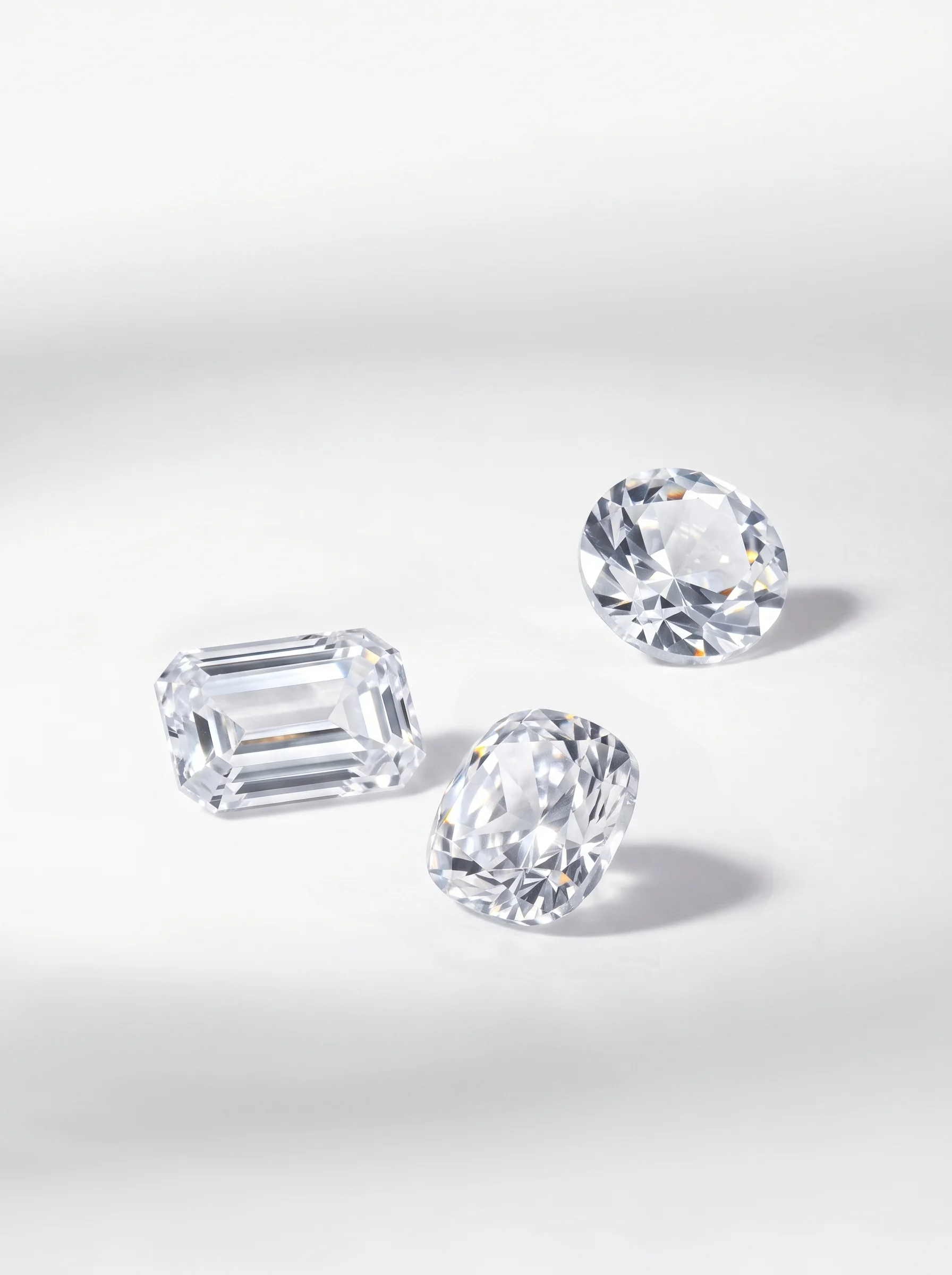
If you are weighing a lab-grown diamond for the first time, there is a good chance one question sits underneath all the others: is it actually a diamond, or is it something dressed up to look like one? It is a fair question, and it deserves a straight answer rather than a sales pitch.
So here it is, plainly: yes. A lab-grown diamond is a real diamond. Not a substitute, not an imitation, not a “diamond-like” stone. The carbon is the same, the crystal structure is the same, the hardness is the same, and the fire in the light is the same. The only thing that differs is where the diamond was formed — deep within the earth over a billion years, or inside a controlled laboratory environment over a few weeks. Everything that makes a diamond a diamond travels with it either way.
At Aurea, every stone we set — diamond and coloured gemstone alike — is grown, not mined. We think buyers deserve to understand exactly why that is a defensible choice, not a compromise. This guide walks through what the science and the regulators actually say, so you can judge it for yourself.
The Honest Answer, First
A diamond, by definition, is a mineral made of pure carbon atoms arranged in a specific crystal lattice. That definition does not mention where the carbon came from. It is true of a stone pulled from a kimberlite pipe in Botswana, and it is true, atom for atom, of a stone grown in a laboratory using the same conditions that form diamonds naturally.
This is not a matter of opinion or marketing. In 2018, the US Federal Trade Commission revised its official Jewelry Guides and removed the word “natural” from the legal definition of a diamond, stating that “a diamond is a mineral consisting essentially of pure carbon crystallised in the isometric system,” and that lab-created stones sharing “essentially the same optical, physical, and chemical properties as mined diamonds” qualify under that definition too (FTC, 2018). The FTC still requires sellers to clearly disclose when a diamond is laboratory-grown — and we do, on every product page — but the disclosure is about origin, not authenticity.
What Actually Makes a Diamond a Diamond
Strip away the marketing language on either side of this debate and a diamond comes down to three things: what it is made of, how its atoms are arranged, and how those atoms respond to light and pressure. The Gemological Institute of America (GIA), the standard-setting laboratory the trade turns to for grading, puts it directly: “synthetic diamonds are grown in laboratories and have essentially the same chemical composition, crystal structure and physical properties as natural diamonds” (GIA, n.d.). GIA is careful with its language, and it does not use the word “same” loosely.
That matters because it is the composition and structure — not the geography of formation — that give a diamond its defining qualities: exceptional hardness, high refractive index, and the particular way it splits white light into colour, often called fire. A lab-grown stone exhibits all three because it is built from the identical material, arranged the identical way.
How a Lab-Grown Diamond Comes to Be
Lab-grown diamonds are produced by one of two established methods, both of which recreate — deliberately — the conditions under which diamonds form in nature.
The first, High Pressure High Temperature (HPHT), places a small diamond seed in a press and exposes it to temperatures of roughly 1,300–1,600°C under enormous pressure, dissolving carbon in molten metal so it crystallises onto the seed, layer by layer, over several days to weeks (GIA, n.d.). It is, essentially, a laboratory reproducing the pressure and heat found far beneath the earth’s crust, in a fraction of the time.
The second, Chemical Vapour Deposition (CVD), grows a diamond inside a vacuum chamber filled with carbon-rich gas. A microwave beam breaks the gas apart, and carbon atoms settle onto a seed crystal over three to four weeks, building the stone one atomic layer at a time (GIA, n.d.). Aurea’s stones, like most fine lab-grown diamonds on the market today, are grown using these controlled, well-documented processes rather than any shortcut.
Neither method is a simulation of a diamond. Both are diamond formation, guided rather than left to geological chance.
Same Hardness, Same Fire, Same Brilliance
For a stone meant to be worn daily and passed down, hardness is not a technicality — it is what lets a piece survive decades without dulling. Diamonds, lab-grown or mined, sit at 10 on the Mohs scale, the top of the scale and, in GIA’s words, “the highest level of hardness” of any known material (GIA, n.d.). A lab-grown diamond will not scratch more easily than a mined one, because it is not a softer material standing in for a harder one. It is the same material.
The same holds for brilliance and fire. The International Gemological Institute (IGI), one of the world’s leading independent certification bodies and the first to develop a dedicated grading system for lab-grown stones, states plainly that lab-grown diamonds “exhibit identical optical, chemical, and physical properties to natural diamonds” and are graded “using the same colour and clarity scales” (IGI, n.d.). To the eye, and to every instrument that measures a diamond’s response to light, a well-cut lab-grown stone performs exactly as a well-cut mined stone does.
Graded and Certified the Same Way
Every diamond Aurea sets — lab-grown, without exception — is graded on the same four criteria used across the industry: cut, colour, clarity, and carat weight, the framework GIA describes as “the universal method for assessing the quality of any diamond, anywhere in the world” (GIA, n.d.). There is no separate, lesser scale reserved for lab-grown stones. A well-cut, colourless, eye-clean lab-grown diamond earns the same grades a mined diamond of equal quality would earn, because the grading criteria measure the stone in front of the grader, not its origin.
Independent gemological laboratories, including GIA and IGI, now issue dedicated laboratory-grown diamond reports, using the same 4Cs framework with a report format that clearly states the stone’s origin, as regulators require (GIA, n.d.). That paperwork exists precisely so a buyer never has to take a seller’s word for it. Every stone Aurea sets arrives certified, and that certificate is yours to keep with the piece.
What Actually Differs — Only the Origin
None of this is to say lab-grown and mined diamonds are identical in every respect that matters to a buyer. They are not. A mined diamond carries a geological age measured in the billions of years and a story tied to a specific place in the earth; some buyers find real meaning in that, and it is a legitimate thing to value. A lab-grown diamond carries a different story — one of precision, control, and a far lighter footprint, since nothing is extracted from the ground to produce it.
What we would ask you to set aside is the idea that lab-grown means fake. That confusion usually traces back to diamond simulants — cubic zirconia, moissanite, and similar materials that only resemble a diamond’s appearance without sharing its composition. Those are not diamonds under any definition, lab-grown or otherwise, and reputable retailers are required to label them as simulants, not diamonds (FTC, 2019). A lab-grown diamond is a wholly different category: real carbon, real crystal structure, real certification. The distinction the industry and its regulators draw is origin — mined or grown — not authenticity.
Why Aurea Chose Grown, Not Mined
We did not arrive at an all-lab-grown catalogue by default; we arrived at it deliberately. Every stone we set, diamond and coloured gemstone alike, is grown and certified, and every piece is made only once it has been ordered — nothing sits finished in a drawer waiting for a buyer, and nothing is taken from the ground to make it. We treat that as a standard to hold ourselves to, not a story to tell around it.
We also do not treat lab-grown diamonds as the budget alternative to something better. At Aurea, a lab-grown diamond and a lab-grown coloured gemstone are presented as equal, standard offerings. Choose on colour and design, not on the assumption that one category is settling for less than the other.
Common Questions
Is a lab-grown diamond considered a real diamond?
Yes. Under the FTC’s current definition and the assessments of leading gemological laboratories, a lab-grown diamond meets the same chemical and physical criteria as a mined diamond. It is graded, certified, and sold as a diamond, with its origin disclosed.
Can a jeweller tell a lab-grown diamond apart from a mined one just by looking?
Not reliably. IGI notes that distinguishing a cut and polished lab-grown diamond from a mined one requires specialised instruments and trained expertise, not the naked eye (IGI, n.d.). Certification, not appearance, is what confirms origin.
Is a lab-grown diamond the same as cubic zirconia or moissanite?
No. Cubic zirconia and moissanite are diamond simulants — different materials shaped to resemble a diamond’s look. A lab-grown diamond is chemically pure carbon in a diamond crystal structure, the same as a mined stone.
Does a lab-grown diamond come with certification?
At Aurea, yes, always. Every stone is independently certified, following the same 4Cs grading framework used for mined diamonds, with the report noting its laboratory-grown origin as regulators require.
A Considered Next Step
We would rather you understood a lab-grown diamond thoroughly than simply trust us on it. If a question remains, our Education section covers certification and care in more depth, or you are welcome to book a complimentary consultation — a jeweller will talk you through the stone, the setting, and anything else on your mind, with no pressure and no obligation.
Book a Consultation · Explore Education
Mira Oduya
The 4Cs, Explained Simply: Cut, Colour, Clarity, and Carat
A clear, calm guide to the 4Cs of diamonds — cut, colour, clarity, and carat — and how they apply equally to lab-grown stones. From Aurea.
How to Find Your Ring Size at Home
A calm, practical guide to measuring your ring size at home using string, paper, or a ring you own — plus how Japanese sizing differs.