
Styling
The Art of Layering: Everyday Elegance, Piece by Piece
An Aurea journal guide to layering fine jewellery well: necklace lengths, bracelet stacking, and why restraint reads as elegance.
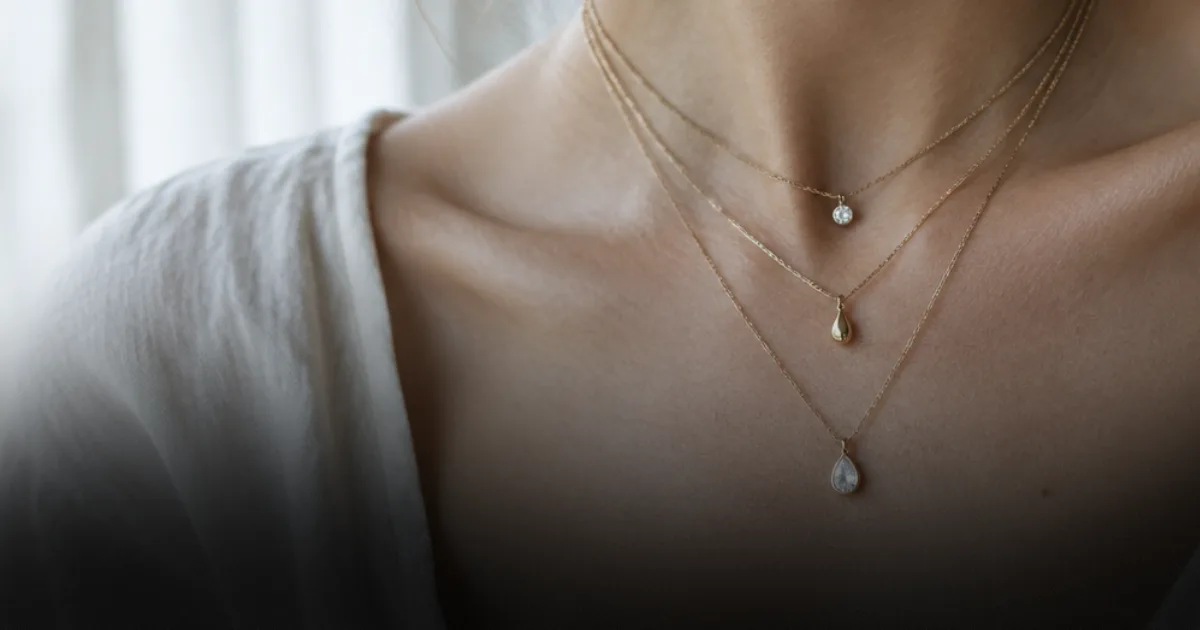
There is a particular kind of dressing that has nothing to do with more. It is the woman who wears three fine chains instead of one and somehow looks less adorned, not more — because each piece has been chosen with the others in mind, and none of them is asking to be noticed on its own. That is the quiet art of layering: not a stack for its own sake, but a way of building a look, piece by piece, that reads as considered rather than crowded.
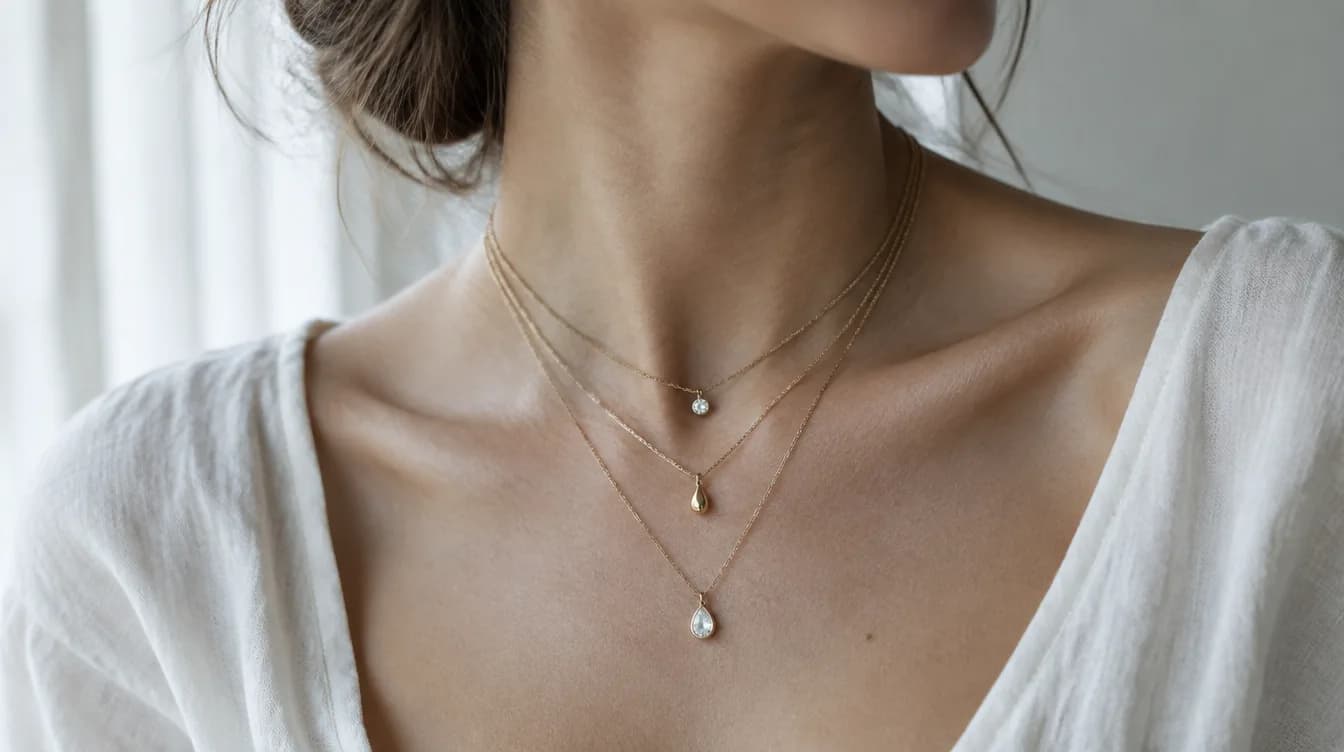
Layering has a reputation for being difficult to get right, and a louder reputation still for being a maximalist's game — armfuls of bangles, necklaces piled to the collarbone. Aurea's approach sits elsewhere. Ours is a quieter version: two or three necklaces at carefully judged lengths, a pair of fine bracelets worn together rather than one, a pendant chosen to sit alongside another rather than compete with it. Done this way, layering is not about wearing more jewellery. It is about wearing it more thoughtfully.
Why Restraint Is the Real Skill
The instinct to add is easy. The skill is knowing where to stop. A well-built layer has a kind of architecture to it — a shortest piece nearest the throat, a longer piece beneath it, perhaps a third doing quiet work in between — and that architecture only holds if every piece earns its place. Add one chain too many, or one that fights the others in weight or finish, and the whole effect collapses from considered into cluttered.
This is, in a way, an extension of how Aurea approaches jewellery generally. Each of our thirteen styles is designed to stand alone — a Solitaire Ring is complete on its own hand, a Solitaire Bracelet complete on its own wrist — but each is also designed with restraint built in, which is precisely what makes them layer well together. A piece that already knows how to be quiet is far easier to combine than one that was built to shout.
Necklaces: Let Length Do the Work
Necklaces are where layering is most visible, and most forgiving once you understand the one variable that matters most: length. Two chains of near-identical length will simply overlap and read as one messy line. The fix is spacing, not more jewellery — a difference of even an inch or two between each piece is usually enough to let each one sit in its own place along the neckline, rather than fighting for the same one (Brilliant Earth, n.d.).
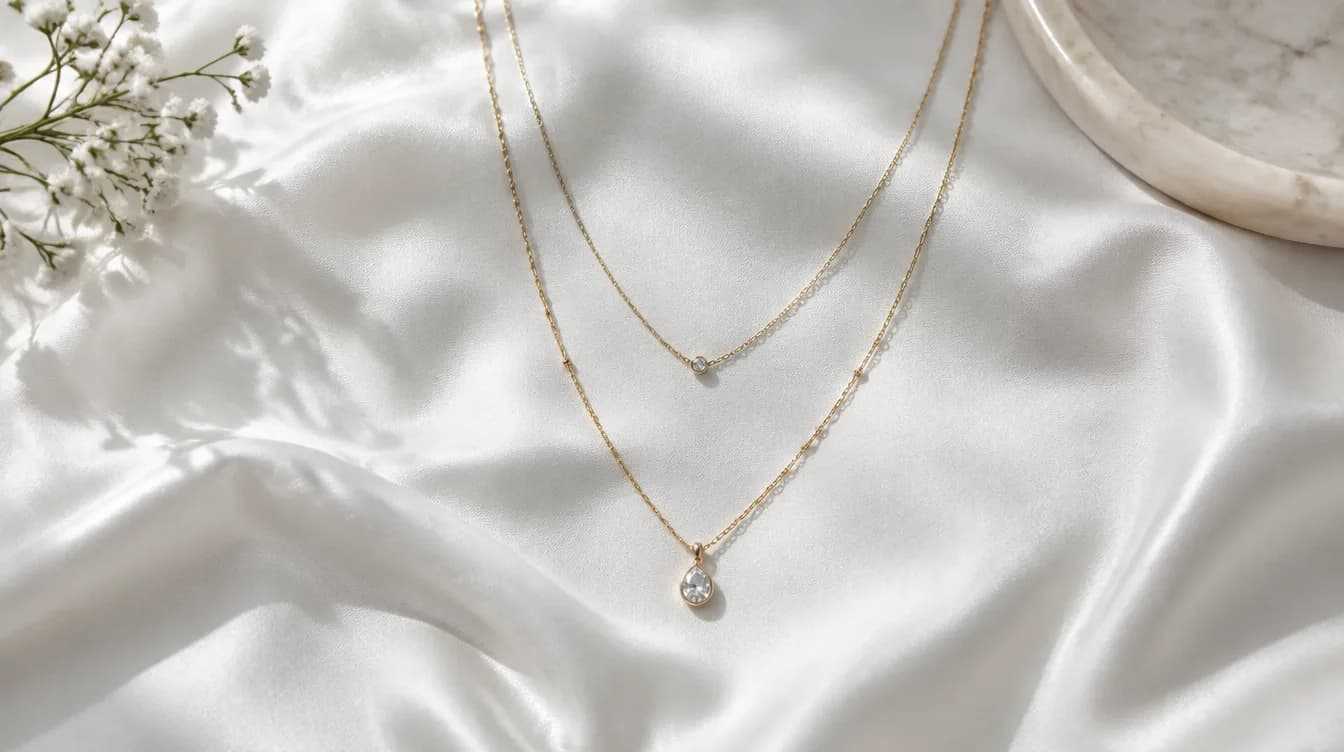
A simple way to begin: choose your shortest piece first — a Solitaire Bracelet-length chain or a close-fitting pendant sits nearest the throat — then add a second, slightly longer piece beneath it, and stop there if you are new to layering. Two well-chosen lengths, worn with intention, will always look more finished than four worn without it. If you do go to three, most stylists still favour a single focal point rather than several — one pendant, such as a Teardrop Pendant or a Filigree Heart Pendant, doing the visual work while the other chains stay plain and simply frame it (Mejuri, n.d.).
Mixing Pieces Without Losing the Plot
Once you are comfortable with length, the next question is usually texture and metal — and the honest answer is that mixing, done with care, tends to look more modern than matching everything exactly. A polished chain sits well against one with more textural interest; a diamond piece and a coloured-gemstone piece can share a neckline without competing, provided the metal tone running through both is consistent. This is precisely the thinking behind Build Your Set, which pairs a necklace, earrings, and bracelet made together so the metal and stones already agree with one another before you begin layering anything on top.
The instinct to keep everything identical — same chain, same finish, same length — is understandable, but it is rarely what makes a layered look feel deliberate. What makes it feel deliberate is variation with a clear logic: one focal piece, supporting pieces that stay quiet, and a metal tone that ties the whole thing together even as the shapes and stones vary.
Bracelets: Layering at Its Quietest
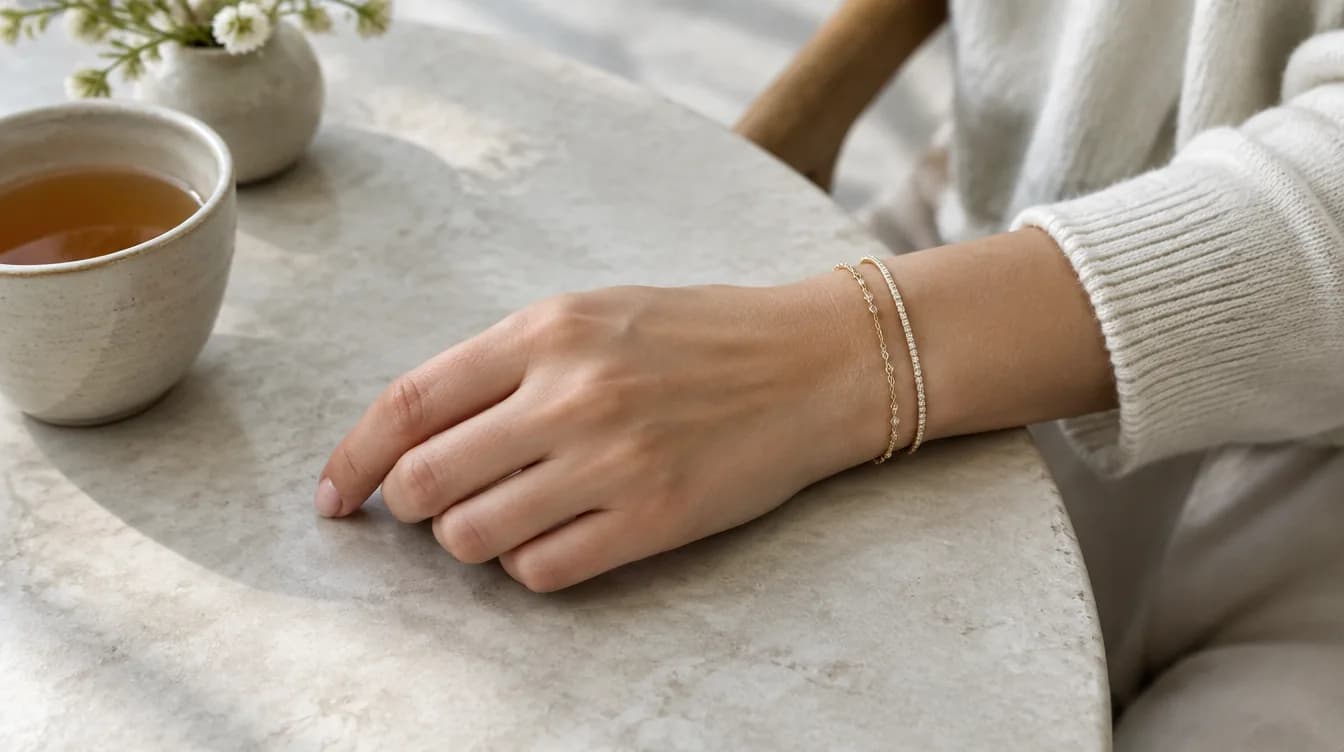
If necklace layering is the visible version of this idea, bracelet layering is its most understated cousin — and, on a considered wrist, often the more elegant one. A Line Bracelet worn alongside a Solitaire Bracelet does the same work a necklace stack does, at a smaller scale: one piece with a continuous line of stones for movement and light, one quieter piece with a single stone for contrast, both slim enough that neither overwhelms the wrist or the other.
The same rule that governs necklaces applies here in miniature: stop before it feels busy. Two fine bracelets, worn with attention to how they sit against each other, will always read as more elegant than three or four vying for space on the same wrist. Aurea's bracelet styles were designed slim enough to be worn this way from the outset — layering was part of the brief, not an afterthought.
When Restraint Reads as Elegance
The through-line across all of this is the same one that runs through Aurea more broadly: less, chosen well, tends to outlast more, chosen quickly. A single, heavily embellished statement piece can feel finished the day you buy it and dated within a few years. A quietly layered edit — built slowly, piece by piece, around styles you already wear and trust — tends to feel more like you the longer you wear it, because it was never trying to be anything other than an honest reflection of what you already like.
This is also, practically, a kinder way to build a jewellery collection over time. You do not need to arrive at a finished layered look in a single purchase. A pendant now, a second chain next year, a pair of bracelets when the occasion calls for it — each addition considered against what you already own, rather than bought in isolation. The result, over time, is not a pile of jewellery but an edit: a small, considered set of pieces that happen to layer beautifully because each one was chosen with the others already in mind.
Building Your Own Layered Edit
If you are starting from nothing, begin with one piece you would wear every day regardless of what else you own — a Solitaire Ring, a single pendant, a Line Bracelet — and let your layers grow outward from there, one considered addition at a time. If you already own a piece or two and are unsure what would sit well alongside them, that is precisely the kind of question a complimentary consultation is for: a jeweller can talk through lengths, metal tones, and pairings with you directly, with no pressure to decide anything on the spot. And if you are building from scratch, Find Your Piece or Build Your Set are both short, straightforward ways to arrive at a starting set made to be worn together rather than assembled by guesswork.
Layering, done this way, is never really about how much jewellery you are wearing. It is about how deliberately you have chosen it — and that is a kind of elegance that never goes out of style.
Sasha Verlaine
How to Build a Jewellery Set That Works Together | Aurea
A calm styling guide to pairing a necklace, earrings and bracelet so stones and metal match, plus where a ring fits into the set.
A coloured stone doesn't have to match anything. It just has to suit the person wearing it.
The 4Cs, Explained Simply: Cut, Colour, Clarity, and Carat
A clear, calm guide to the 4Cs of diamonds — cut, colour, clarity, and carat — and how they apply equally to lab-grown stones. From Aurea.