
Learn
Lab Diamond or Coloured Gemstone: Choose on Colour | Aurea
A lab diamond and a lab-grown gemstone are equally real and certified. Here is how to choose between them by colour, not by category.
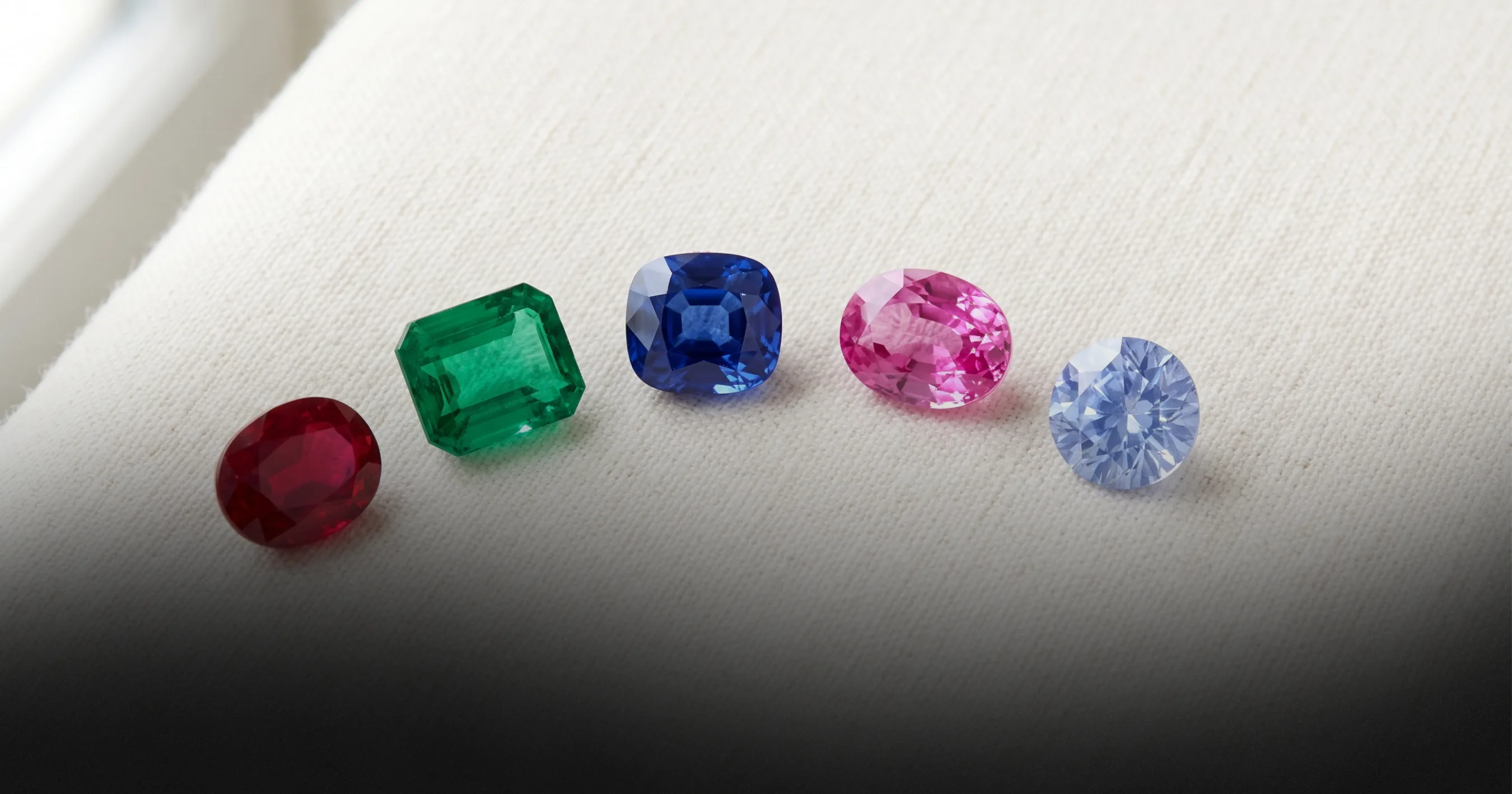
Most people start choosing a piece of fine jewellery by asking the wrong question first: diamond, or coloured stone? It feels like the natural place to begin, but it treats the two as different tiers of the same decision — one the safe, classic choice, the other the more personal, slightly riskier pick. At Aurea, that hierarchy doesn't exist. A lab diamond and a lab-grown coloured gemstone are both real stones, both certified, and both standard offerings across every style we make. Neither sits above the other, and neither is the budget option.
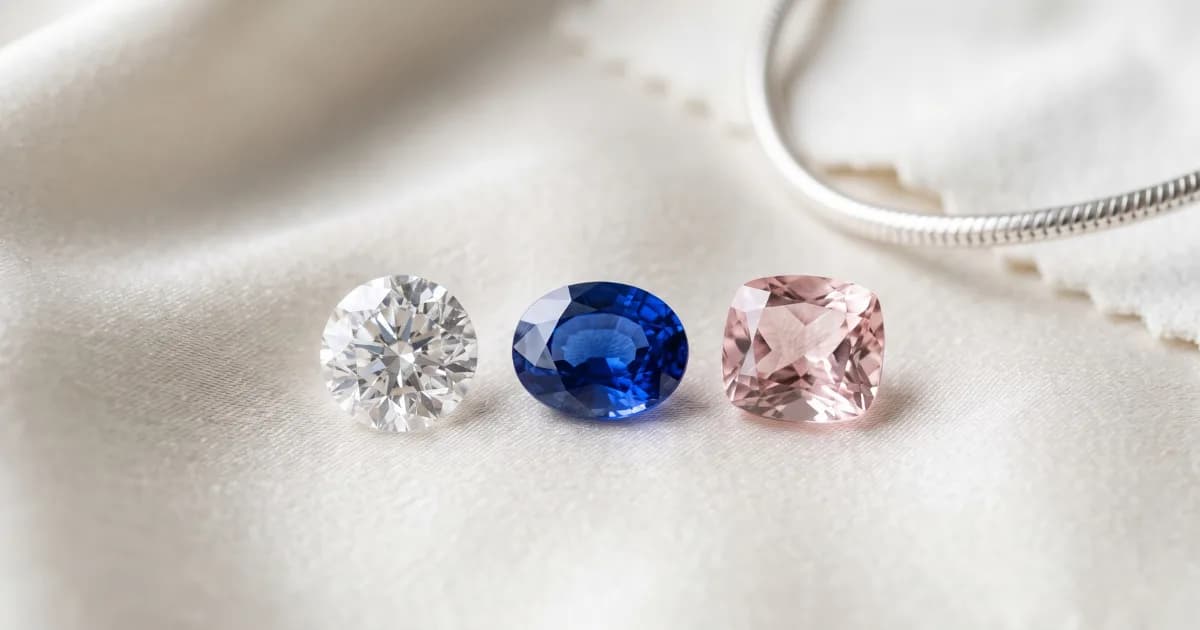
This guide sets that framing aside and starts from a better question: what colour, and what tone, do you actually want to wear? We'll walk through how colour works in a stone, why category isn't a useful filter here, and how to think about your own skin tone, wardrobe, and personality when you choose — whichever stone that choice lands on.
Two Standards, Not Two Tiers
The reason category feels like the first decision is a habit borrowed from traditional fine jewellery, where a mined diamond has long been marketed as the default centrepiece and a coloured gemstone as an alternative to it — something chosen instead of the "proper" stone, often at a lower price point. That habit doesn't map onto how Aurea's collection is built.
Every stone we set — diamond or coloured gemstone — is grown in a laboratory rather than mined, and every one is certified before it reaches you. The Gemological Institute of America (GIA), the standard-setting body for gem identification, states plainly that a laboratory-grown diamond "possesses essentially the same chemical, physical and optical properties as its natural counterpart" (GIA, n.d.-a) — the material itself doesn't change because of where it formed. The same logic extends to lab-grown coloured gemstones: origin is a fact worth disclosing, not a mark of lesser quality. Choosing a coloured stone over a diamond at Aurea isn't a trade-down. It's a different colour, made and certified to the same standard.
Why "Category" Isn't the Useful Filter
There's a second, more understandable hesitation behind the category question, and it's worth naming directly: some buyers still associate lab-grown stones — particularly coloured ones — with simulants like cubic zirconia, which only imitate a gemstone's appearance rather than sharing its composition. That association is inaccurate, but it's also not unreasonable given how the market has been marketed for decades, so it deserves a straight answer rather than a defensive one.
A lab-grown gemstone is not a simulant. It is the same mineral species as its mined counterpart, grown under conditions that replicate how it forms in the earth, which is why regulators require it to be labelled by what it is, not treated as a separate, lesser product. The US Federal Trade Commission's jewellery guidance instructs sellers of a laboratory-grown gemstone to disclose it as such — "laboratory-grown," "laboratory-created," or an equivalent term — using the correct mineral name alongside it (FTC, n.d.). That's disclosure of origin, applied to a genuine gemstone, not a warning label on an imitation. Once that distinction is clear, the only real question left is which colour you actually want to wear.
How Colour Actually Works: Hue, Tone, and Saturation
Diamonds are graded for colour on a fixed, near-colourless-to-colourless scale, from D to Z, assessed against master stones under standardised lighting (GIA, n.d.-b) — a system built for consistency, because the goal with a white diamond is the absence of colour. Coloured gemstones are judged differently, and understanding why makes choosing one far less intimidating.
GIA notes that "the grading of colored stones is a highly complex process with countless variables that makes a universal grading system difficult to establish" (GIA, n.d.-c). In practice, gemstone colour is described through three qualities working together: hue (the base colour itself — blue, green, pink, and so on), tone (how light or dark that colour sits), and saturation (how pure or muted the colour appears). There's no single "correct" combination — only the one that looks best to you.
Jewelers of America's own buying guidance reflects this directly: "When buying colored gemstone jewelry, select what you consider beautiful. Because of the subtle differences in the tone and hue of gemstones, look at several options to find the one you prefer" (Jewelers of America, n.d.). That's the opposite of a rigid grading exercise — it's permission to choose on instinct, which is exactly how colour should be chosen.
Choosing Colour That Suits You, Not Just the Ring
Once category is off the table, colour becomes a more personal decision than most buyers expect — closer to choosing a coat or a lipstick shade than comparing a spec sheet. A few starting points tend to help, especially for a first fine-jewellery purchase made for yourself rather than handed down.
Undertone before trend. Warmer skin undertones tend to sit comfortably against warmer hues and yellow or rose-toned metal; cooler undertones often suit cooler hues and white or platinum-toned settings. This is a starting point, not a rule — the only real test is holding a stone near your hand in daylight.
What you already reach for. A wardrobe built around muted, neutral tones will often welcome a saturated, statement colour; a wardrobe already full of colour may sit better with something quieter, including a diamond's clear brilliance.
How often you'll wear it. A piece meant for daily wear rewards a tone you won't tire of. A piece kept for occasions can afford to be bolder.
What feels like you. Warm and easygoing, cool and thoughtful, soft and romantic, clean and classic — the language we use in Find Your Piece, our five-question quiz, exists precisely because personality is often a better guide to colour than any technical chart.
The Diamond's Case: Why Clear Isn't "No Colour"
It's worth saying plainly: choosing a diamond is also a colour choice, not a default. A well-cut diamond's near-colourless brilliance and fire are their own specific look — bright, versatile, and effectively timeless against any metal or wardrobe — graded with precision on that same D-to-Z scale (GIA, n.d.-b). Some buyers land on a diamond because clear brilliance is genuinely the look they want, not because it felt like the safer or more conventional option. That's a legitimate, colour-first reason to choose one, and it deserves the same respect as choosing a deep green or a soft pink.
What Certification Confirms, Whichever You Choose
Because both stones are lab-grown and both are certified, it helps to know what that certification actually verifies, and why it looks slightly different depending on the stone.
A lab-grown diamond is certified against the 4Cs — cut, colour, clarity, and carat weight — by an independent gemological laboratory, the same framework used for mined diamonds. A lab-grown coloured gemstone is certified through an identification report instead, which GIA describes as a document that "identifies and describes a material and lists detectable treatments" (GIA, n.d.-d) — confirming the stone's species, its laboratory-grown origin, and anything done to it after growth. Different report, same purpose: independent, third-party proof that the stone described is the stone you receive, and that its origin is stated honestly rather than left ambiguous.
A Note on Price, and Why It Isn't the Deciding Factor
Prices at Aurea are shown in Japanese yen and US dollars, and they do vary by style and by the specific stone chosen — material cost differs from stone to stone, and larger or rarer cuts naturally sit at a different point than smaller ones. What that variation isn't is a quality ranking. A coloured gemstone piece is not the "entry" option and a diamond piece is not the "upgrade" — both are made to order, both are inspected before they ship, and both carry the same certification standard. If you're building a full look rather than a single piece, Build Your Set lets you pair a necklace, earrings, and bracelet made together in one colour, so the decision only has to be made once.
A Closing Note
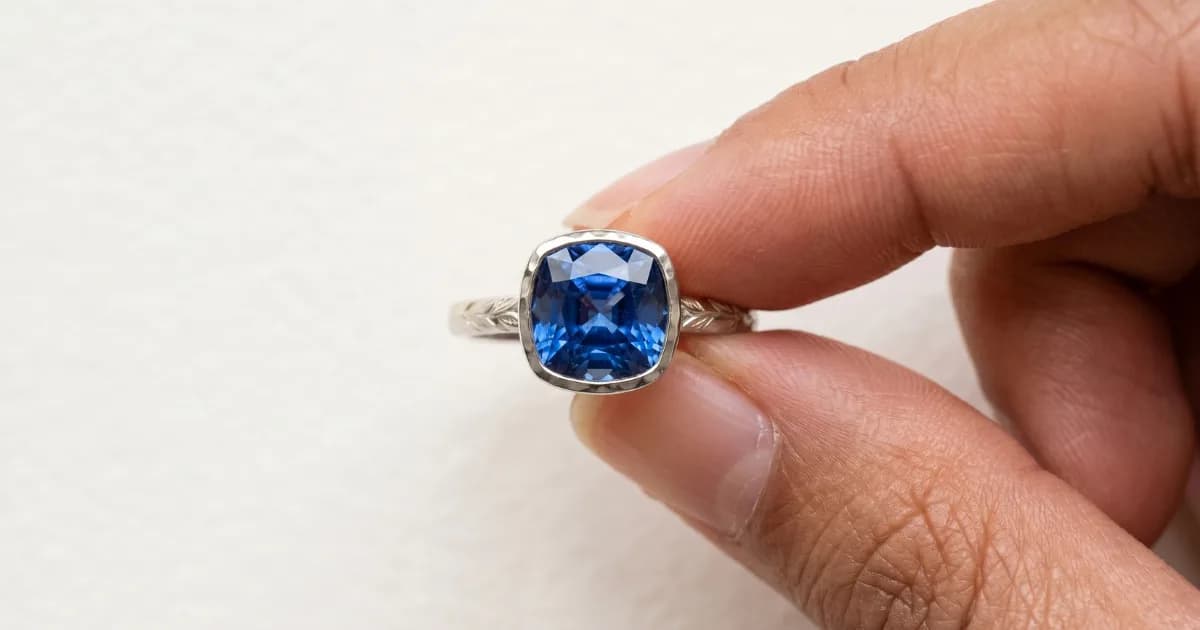
Colour is a more personal decision than category ever was, which is exactly why it's a better place to start. If you'd like to see how a particular hue sits against your own hand, or simply want to talk through what suits you before you decide, try Find Your Piece for a short, guided starting point, or book a complimentary consultation — a jeweller will walk through it with you directly, with no pressure and no obligation.
Frequently Asked Questions
Is a lab-grown gemstone the same quality standard as a lab diamond?
Yes. At Aurea, both are lab-grown and both are certified before they ship. A lab diamond is graded on the 4Cs; a lab-grown coloured gemstone is verified through an identification report confirming species, origin, and any treatments. Neither is a lesser or discounted version of the other.
How do I choose a gemstone colour that suits me?
Start with your skin's undertone and the tones you already wear most, then consider how often you'll wear the piece — daily wear rewards a colour you won't tire of, while occasion pieces can be bolder. Personality is often the better guide: Find Your Piece is built around exactly that.
Is a coloured gemstone cheaper than a diamond?
Not necessarily, and it isn't meant to be treated that way. Price varies by style and by the specific stone chosen, reflecting material factors, but a coloured gemstone is not positioned as the budget alternative to a diamond — both are standard, equally certified offerings.
Are lab-grown coloured gemstones real gemstones?
Yes. A lab-grown gemstone shares the same mineral species and properties as its mined counterpart; it is not a simulant like cubic zirconia. Regulators require it to be disclosed as laboratory-grown, which is a statement of origin, not an admission that it is imitation.
Can I mix stone colours across a set?
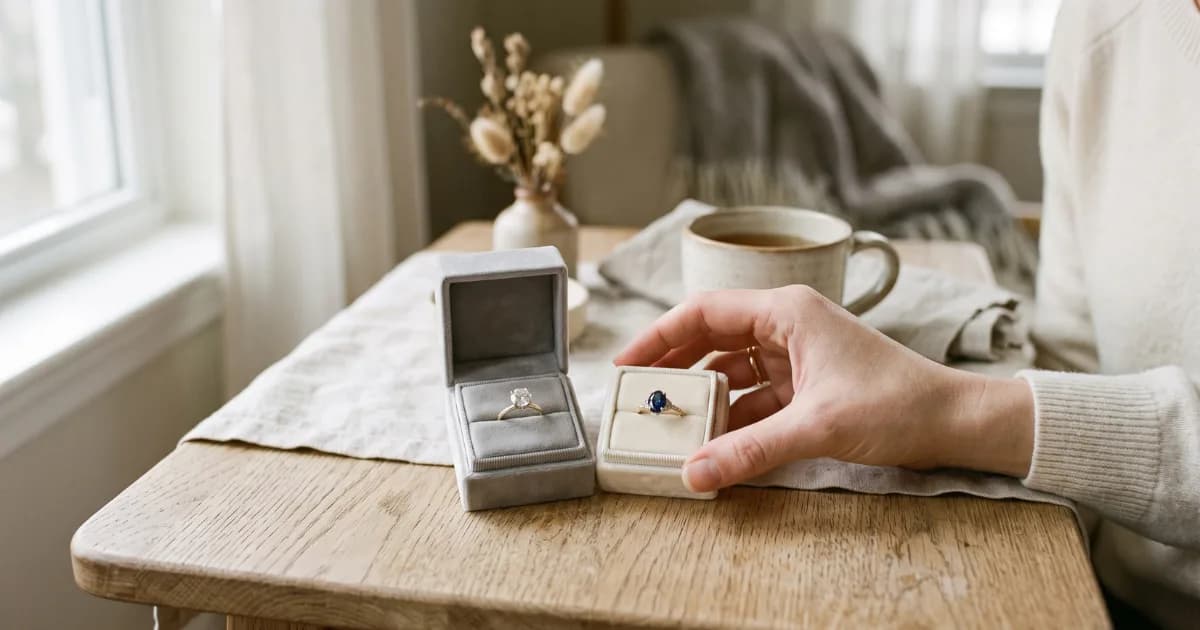
You can choose independently for each piece, or use Build Your Set to pair a necklace, earrings, and bracelet made together in a single colour, so the stones and metal match across the set.
Theo Lindqvist
Writes about stones, for Aurea
Theo answers the questions people ask before they buy — about origin, certification, and what a stone actually is. He'd rather a piece read plainly than impressively.
A Guide to Diamond Shapes — and Finding the One That's You
A calm guide to diamond shapes — round, oval, cushion, pear and beyond — and what each says about you. Certified lab-grown diamonds, crafted to order at Aurea.
Reserve or Pay in Full? Understanding Your Options
Pay in full or reserve with a deposit and pay before it ships. A calm, transparent guide to Aurea's two payment paths for made-to-order jewellery.
How to Clean Fine Jewellery at Home | Aurea
A gentle, jeweller-approved guide to cleaning fine jewellery at home safely — including lab-grown diamonds and gemstones.