
Learn
A Guide to Diamond Shapes — and Finding the One That's You
A calm guide to diamond shapes — round, oval, cushion, pear and beyond — and what each says about you. Certified lab-grown diamonds, crafted to order at Aurea.
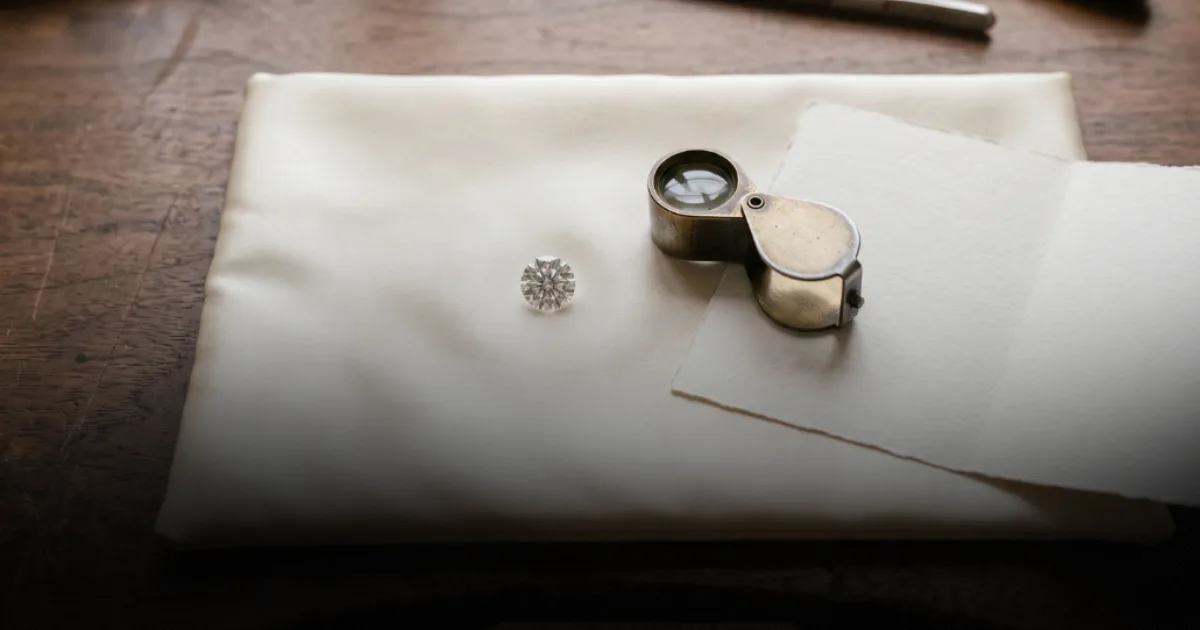
Before colour, before setting, before metal, most people choose a shape first. It is often an instinctive decision, made in seconds in front of a tray of stones or a screen of thumbnails, and it tends to reveal more about a person than any other single choice in fine jewellery. A round stone reads differently to a pear. A cushion reads differently to an oval. None is more ‘correct’ than another — each simply carries its own quiet character.
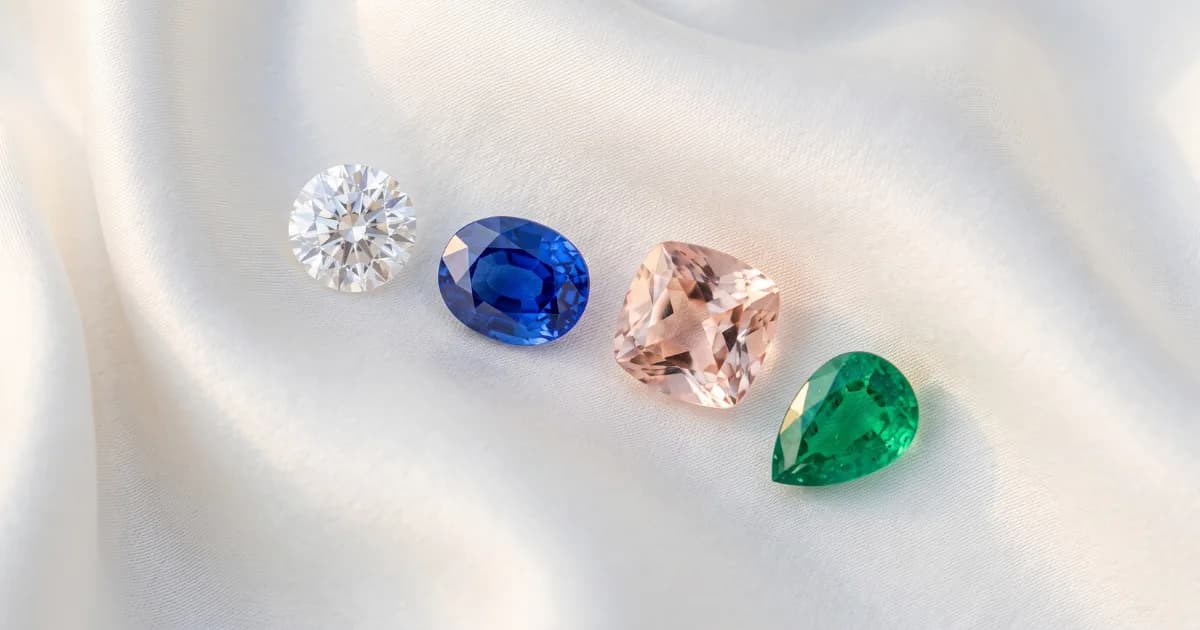
This guide walks through the shapes you are most likely to encounter — what defines each one, how it wears, and who tends to reach for it — so that choosing feels less like a technical decision and more like recognising something you already knew about yourself. Whether the piece marks a birthday, an anniversary, a milestone, or simply the decision to buy something for yourself, shape is where to begin.
Shape or cut? A quick distinction
‘Shape’ and ‘cut’ are often used as if they mean the same thing, but they describe two different aspects of a stone. Shape is the outline of the diamond viewed from above — round, oval, cushion, and so on. Cut refers to how a stone's facets are proportioned and angled, which governs how it returns light back to the eye (GIA, n.d.-b). Round brilliant is the only shape that receives a formal GIA cut grade, because it is the only one cut to a single, fully standardised facet arrangement; every other shape, known as a ‘fancy shape’, is assessed more qualitatively, on its own proportions and symmetry (GIA, n.d.-a; GIA, n.d.-b).
At Aurea, this distinction matters less than it might elsewhere, because every stone we set — whatever its shape — is graded on the same standard and certified before it reaches you. The question that actually matters is simpler: which outline do you want to live with?
Round: the quiet classic
Round brilliant remains the shape most people choose first, and by a wide margin. In The Knot's 2024 Jewelry and Engagement Study, 28 per cent of engagement rings sold featured a round centre stone — still the single most popular shape, even as its share has eased over the past decade as other shapes have gained ground (The Knot, 2024). Its 57 or 58 facets are arranged specifically to maximise brightness and fire, which is part of why it remains the benchmark against which every other shape is measured (GIA, n.d.-a).
Round suits a wearer who prefers a piece that needs no explanation — timeless rather than of-the-moment, comfortable rather than conversation-starting. Within Aurea's edit, a round centre stone anchors the Solitaire Ring, held high with a single small clear shoulder, and opens into a petalled surround in the Bloom Halo Ring.
Oval: elongated elegance
If round is the classic, oval is its more contemporary sibling. It carries a similar brilliant-cut faceting pattern, stretched into an elongated silhouette that can make the finger look longer and the stone appear larger for its actual weight, since more of its surface area faces upward (GIA, n.d.-a). Its rise has been dramatic: the same Knot study found oval climbing to 25 per cent of engagement rings in 2024, up from just 2 per cent in 2015 (The Knot, 2024).
Oval suits someone drawn to a piece that feels current without straying far from tradition — elegant rather than expected. It is a shape we expect to feature more in Aurea's edit as the collection grows; for now, it sits alongside round as one of the two most requested outlines among our stone options.
Cushion: soft corners, vintage warmth
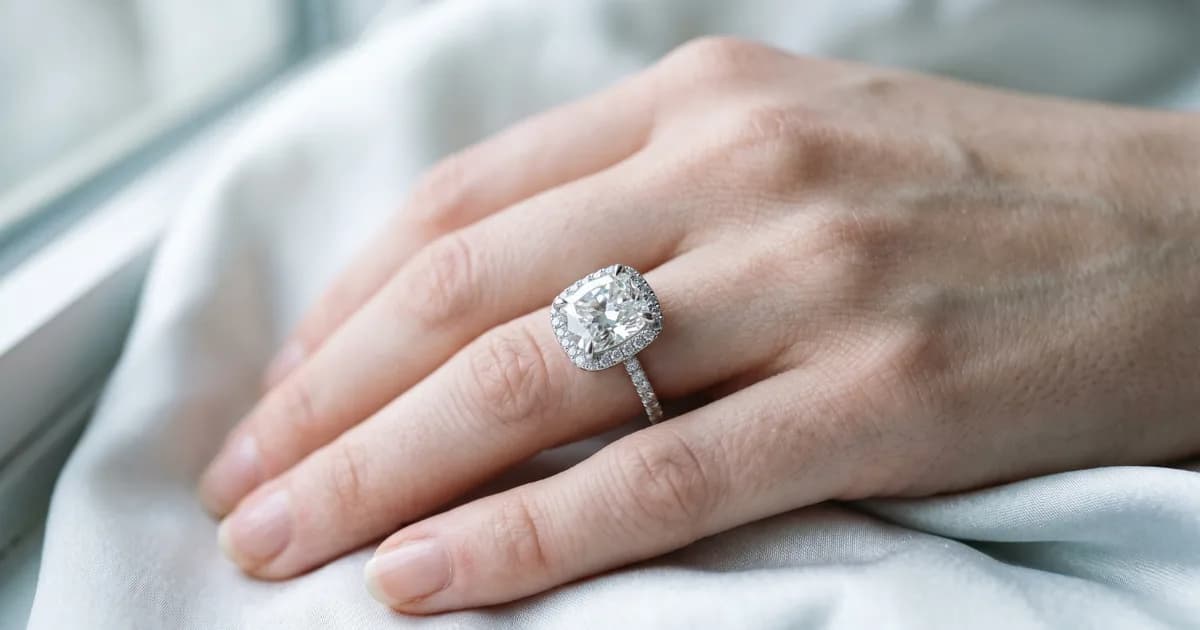
Cushion-cut stones combine a squarish or rectangular outline with softly rounded corners, cut with larger facets that produce a broader, more romantic light pattern than a round brilliant's crisp scintillation (GIA, n.d.-a). The shape has genuine history — it predates the modern round brilliant by more than a century — yet reads as entirely at home in a contemporary setting.
Cushion tends to suit someone who wants presence without sharp edges: a piece that feels generous, a little romantic, and unmistakably considered. It is the shape our Cushion Halo Ring is built around — a generous cushion stone framed close within a halo, set so the full outline is on display rather than hidden under the mounting.
Pear (teardrop): the graceful outlier
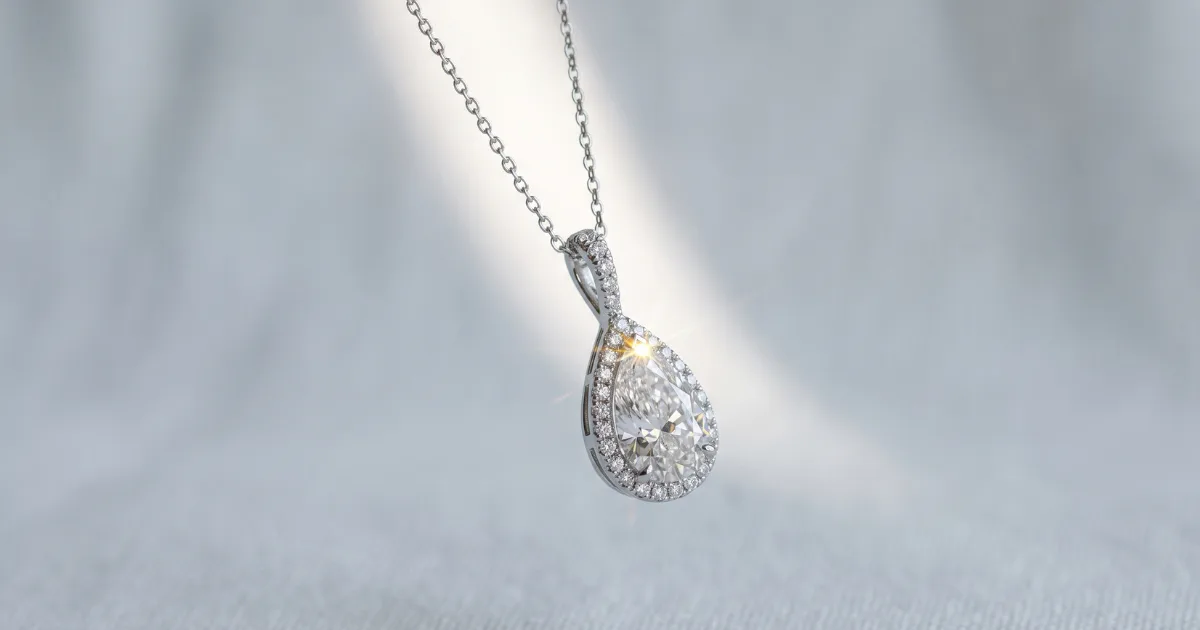
The pear shape combines the rounded end of a brilliant with the tapered point of a marquise, producing a teardrop outline that can be worn with the point facing up or down, depending on preference (GIA, n.d.-a). It is the shape most associated with movement and gentle asymmetry — part of its appeal to anyone who wants a piece to hold quiet visual interest rather than perfect symmetry.
Our Teardrop Pendant is built entirely around this idea: a pear-shaped stone suspended within a pavé drop — the largest single stone we set in a pendant — chosen because the shape reads best when it is given room to hang and turn in the light.
A few more worth knowing
Beyond the four above, several other shapes appear regularly across fine jewellery, each with its own character (GIA, n.d.-a; GIA, n.d.-b):
Princess — a square or rectangular brilliant with crisp, uncropped corners; modern and graphic, with sparkle close to a round's.
Emerald — a rectangular step-cut with long, open facets that trade brilliant sparkle for a calmer ‘hall of mirrors’ flash, which tends to show off a stone's clarity more openly.
Marquise — an elongated shape tapered to a point at both ends, often chosen because it can appear larger than other shapes of equivalent weight.
Asscher — a square step-cut related to the emerald, with a distinctly geometric, art-deco character.
Heart — the most literal and romantic of the fancy shapes, usually reserved for pendants and occasion pieces rather than everyday wear.
Finding the shape that's you
There is no single correct answer, and shape preference rarely follows logic in the way carat weight or metal choice sometimes does. A useful starting point is to think about how you already dress and what you already reach for. Someone drawn to a wardrobe of clean lines and few embellishments often gravitates toward round or emerald. Someone with a soft spot for vintage detail tends to land on cushion. Someone who wants a piece that catches the eye without shouting for attention often chooses pear or oval.
Instinct usually matters more than any rule of thumb, though, which is exactly why we built Find Your Piece — five short questions about occasion and personality that return a shortlist worth a closer look. And because a shape can look quite different in a photograph to how it sits in the hand, every Aurea order can begin with a complimentary consultation: a jeweller talking you through proportions and light in real terms, with no obligation attached.
Every shape, grown and certified
Whichever outline ends up on your hand or around your neck, at Aurea it begins the same way. Every stone we set — diamond or coloured gemstone — is grown, not mined. According to GIA, laboratory-grown diamonds have essentially the same chemical, physical, and optical properties as their mined counterparts: the same carbon crystal structure, the same hardness, the same fire, distinguishable from a natural stone only by trained gemologists using specialised equipment (GIA, n.d.-c). Neither origin is ‘better’ — only the origin differs.
That standard holds regardless of shape. Every stone is certified, and every piece is crafted only once it has been ordered — nothing sits finished in a drawer waiting for a buyer. Production takes around 20 days, after which pieces are dispatched from Singapore and tracked the whole way to Japan and beyond. Pricing is shown throughout in Japanese yen and US dollars, with diamond styles sitting a little higher than the coloured-gemstone edit; the specific figure for any piece and stone combination is always shown at checkout.
Choosing, quietly
There is no wrong shape — only the one that feels most like you. If you would like to see how a particular outline actually behaves in the hand and under different light, book a complimentary consultation and a jeweller will walk you through it. If you would rather start with a shortlist, Find Your Piece takes five questions and returns pieces worth a closer look. Either way, the collection itself is always open to browse, whenever you are ready.
Frequently asked questions
What is the difference between diamond shape and diamond cut?
Shape describes a diamond's outline when viewed from above — round, oval, cushion, pear, and so on. Cut refers to how a stone's facets are proportioned and angled, which determines how it reflects and returns light. Round brilliant is the only shape with a standardised facet pattern, so it is the only one to receive a formal GIA cut grade; other shapes are assessed on their individual proportions and symmetry instead (GIA, n.d.-a; GIA, n.d.-b).
What is the most popular diamond shape?
Round brilliant remains the most popular shape by a clear margin, chosen for 28 per cent of engagement rings in The Knot's 2024 Jewelry and Engagement Study, with oval in second place at 25 per cent and rising quickly (The Knot, 2024).
Does diamond shape affect how big a stone looks?
Yes. Elongated shapes such as oval, pear, and marquise present more surface area face-up than a round or square stone of the same carat weight, which is part of why they can appear larger even at an identical weight (GIA, n.d.-a).
Are lab-grown diamonds available in every shape?
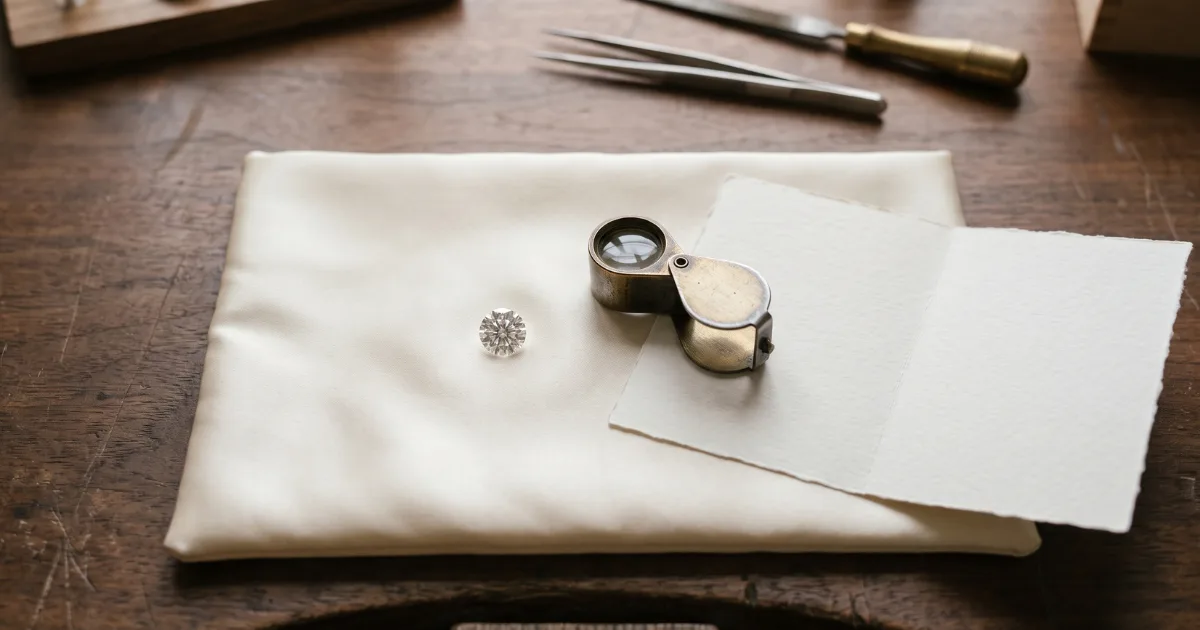
Yes. A lab-grown diamond begins as a rough crystal that is then cut and polished exactly as a mined diamond would be, so any shape available in a mined stone — round, oval, cushion, pear, and beyond — is equally available as lab-grown.
Theo Lindqvist
Writes about stones, for Aurea
Theo answers the questions people ask before they buy — about origin, certification, and what a stone actually is. He'd rather a piece read plainly than impressively.
Reserve or Pay in Full? Understanding Your Options
Pay in full or reserve with a deposit and pay before it ships. A calm, transparent guide to Aurea's two payment paths for made-to-order jewellery.
How to Clean Fine Jewellery at Home | Aurea
A gentle, jeweller-approved guide to cleaning fine jewellery at home safely — including lab-grown diamonds and gemstones.
The Right Way to Store Your Jewellery | Aurea
A calm, practical guide to storing fine jewellery so it stays scratch-free, tangle-free, and safe from humidity — at home and while travelling.