
Learn
The Right Way to Store Your Jewellery | Aurea
A calm, practical guide to storing fine jewellery so it stays scratch-free, tangle-free, and safe from humidity — at home and while travelling.
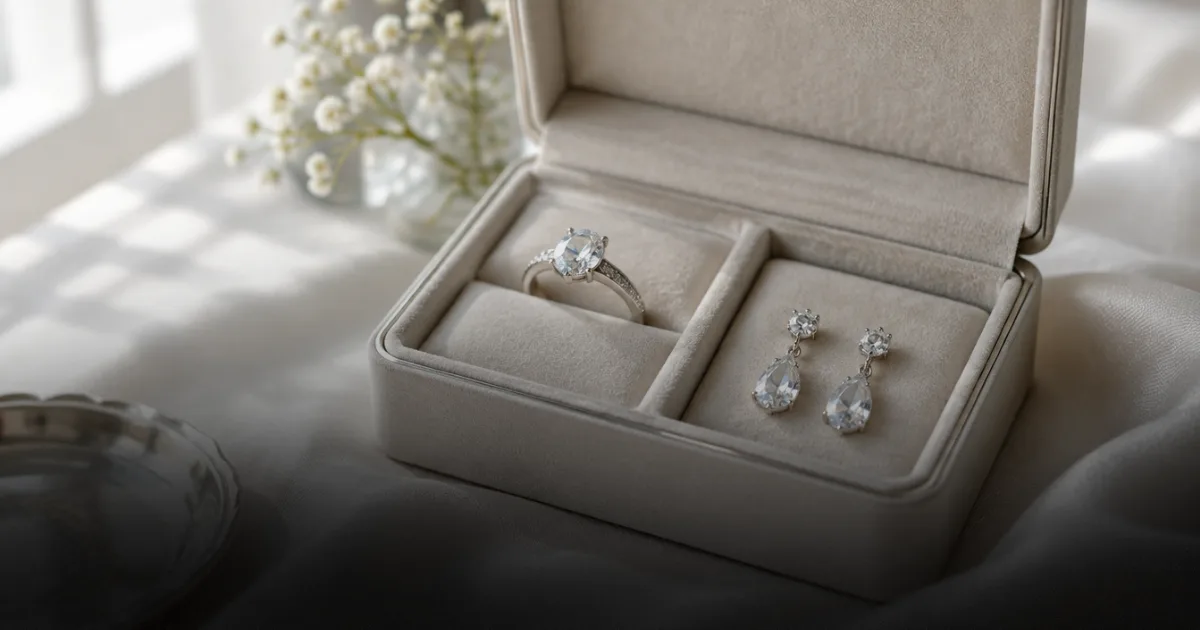
A well-made piece of jewellery is built to last decades, not seasons — but how it's kept between wearings has more influence on how it ages than almost anything else. Scratches, tangled chains, and metal that's lost its shine are rarely the result of one accident. They're usually the slow effect of jewellery being stored the wrong way for a long time. None of the fixes ask for a special cabinet or a significant outlay. This guide sets out the handful of habits that keep fine jewellery — the stone and the metal that holds it — looking the way it did the day it arrived, including a few details worth knowing if you're storing jewellery somewhere as humid as Japan.
Why Storage Matters More Than People Realise
Fine jewellery is more often damaged by other jewellery than by anything else it comes into contact with. A diamond is the hardest natural material there is, which means it can scratch almost any softer gemstone or metal setting it's left touching — including another diamond's setting, or the finish on a chain lying next to it. The Gemological Institute of America puts the underlying habit plainly: "Jewelry should never be tossed into a drawer or on top of a dresser — that's asking for scratches and damaged gems" (Gemological Institute of America, n.d.). The stones themselves are rarely the fragile part. It's the metal, the polish, and the pieces lying carelessly against one another that tend to show wear first.
Give Every Piece Its Own Space
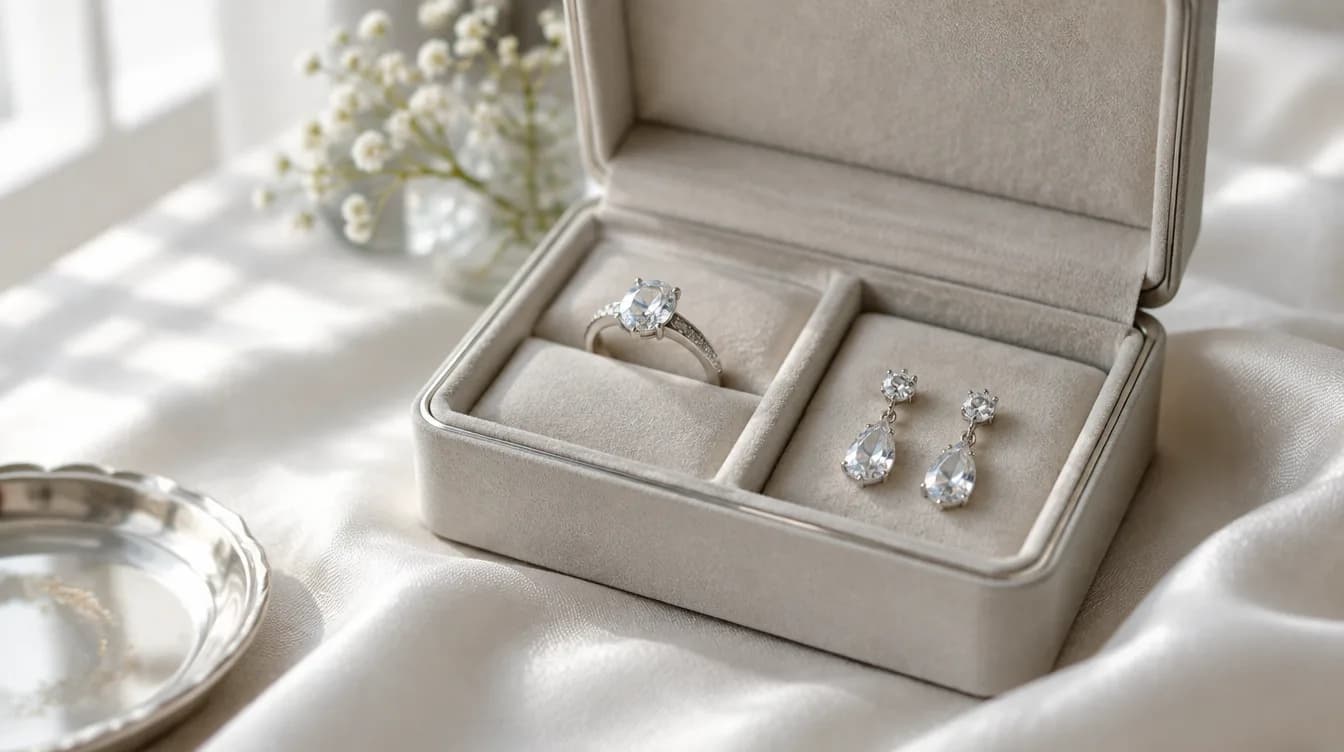
The single most useful habit in this guide is also the simplest: never let two pieces touch inside storage. Jewelers Mutual Group, the insurer that many fine-jewellery owners rely on, recommends exactly this — "Store your fine jewelry in a soft cloth or individual jewelry box with a lid to prevent scratches" (Jewelers Mutual Group, n.d.). GIA offers a similarly low-effort solution: "Most jewelry pieces come in a box or pouch from the store, which is a perfect place to keep them" (Gemological Institute of America, n.d.).
That's worth remembering with an Aurea piece specifically. The box or pouch it arrives in isn't just packaging for the journey from Singapore — it's soft-lined, sized to the piece, and entirely suitable as its everyday home. There's no need to consolidate rings into a single tray or drop earrings into a shared dish once the ribbon comes off. If a piece is worn often enough that its box feels inconvenient, a jewellery case with individual, fabric-lined compartments does the same job.
Keep Jewellery Away from Humidity and Heat
Moisture in the air is one of the quieter causes of dulled metal and tarnish, and it's a genuinely relevant factor for anyone storing jewellery in Japan rather than a drier climate. Tokyo's average relative humidity ranges from around 50 percent in the depths of winter to roughly 76 percent at the height of summer (Weather and Climate, n.d.) — high enough that a jewellery box left near a window, in a bathroom, or in a room without air conditioning can hold noticeably more moisture than the same box in a controlled, air-conditioned space.
Jewelers Mutual Group's general guidance applies directly here: keep jewellery "dry and out of direct sunlight," in "a cool and dry place" (Jewelers Mutual Group, n.d.). In practice, that means a drawer or cabinet away from windowsills, radiators, and steamy bathrooms, rather than anywhere temperature and humidity swing through the day. During Japan's more humid months, a small silica gel packet or anti-tarnish strip tucked into the storage box is a cheap, unobtrusive way to keep the air around a piece drier than the room it's kept in — a small habit that does a disproportionate amount of good.
Storing Chains So They Don't Tangle
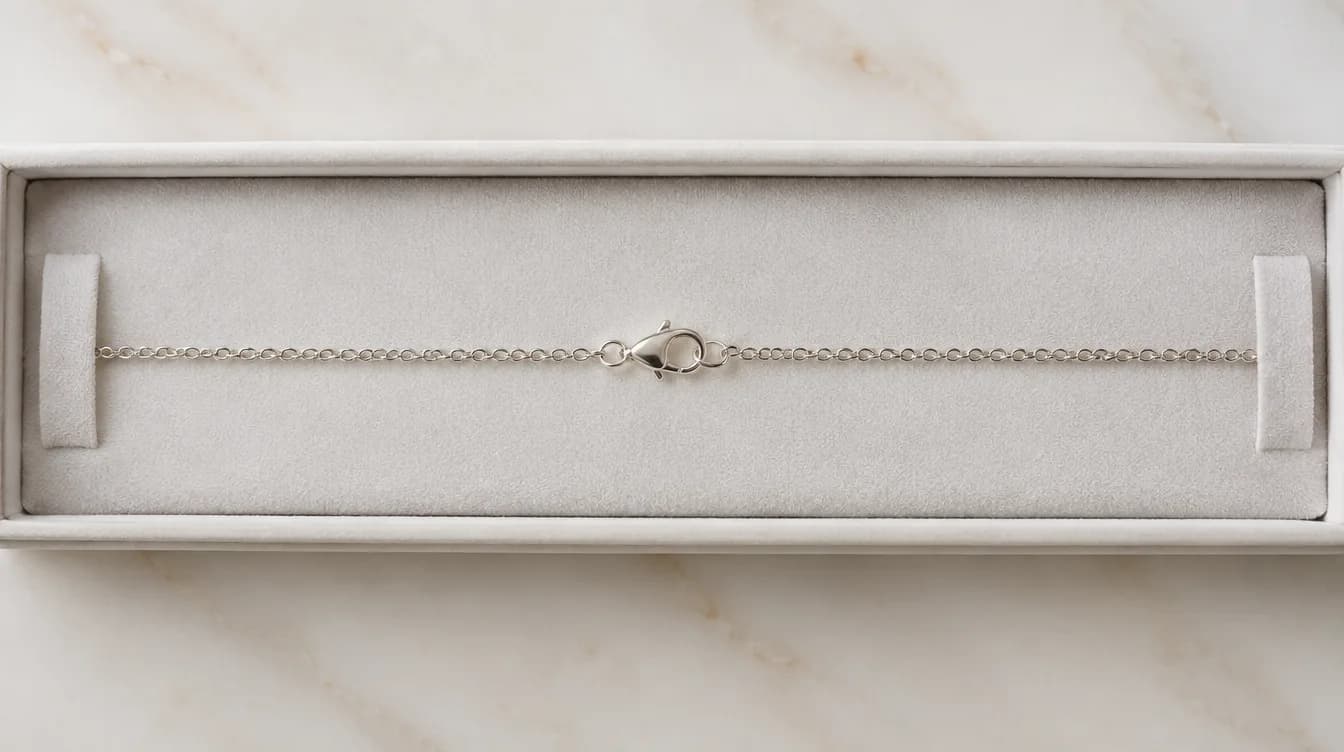
Chains are the pieces most likely to be avoided simply because untangling them has become a chore. The fix isn't a special box — it's space. Blue Nile's advice is direct: "To prevent tangling of chains and other styles, store them with plenty of space between one another" (Blue Nile, n.d.). A chain laid flat in its own compartment, clasp fastened before it's put away, rarely knots itself. The trouble starts when several chains are left loose in the same tray, or a fine chain is left resting against a textured or studded piece that can snag its links.
If a jewellery box doesn't have enough individual compartments for every chain owned, a simple soft pouch per piece works just as well, and takes seconds to close a clasp inside before it's put away.
Travelling With Your Jewellery
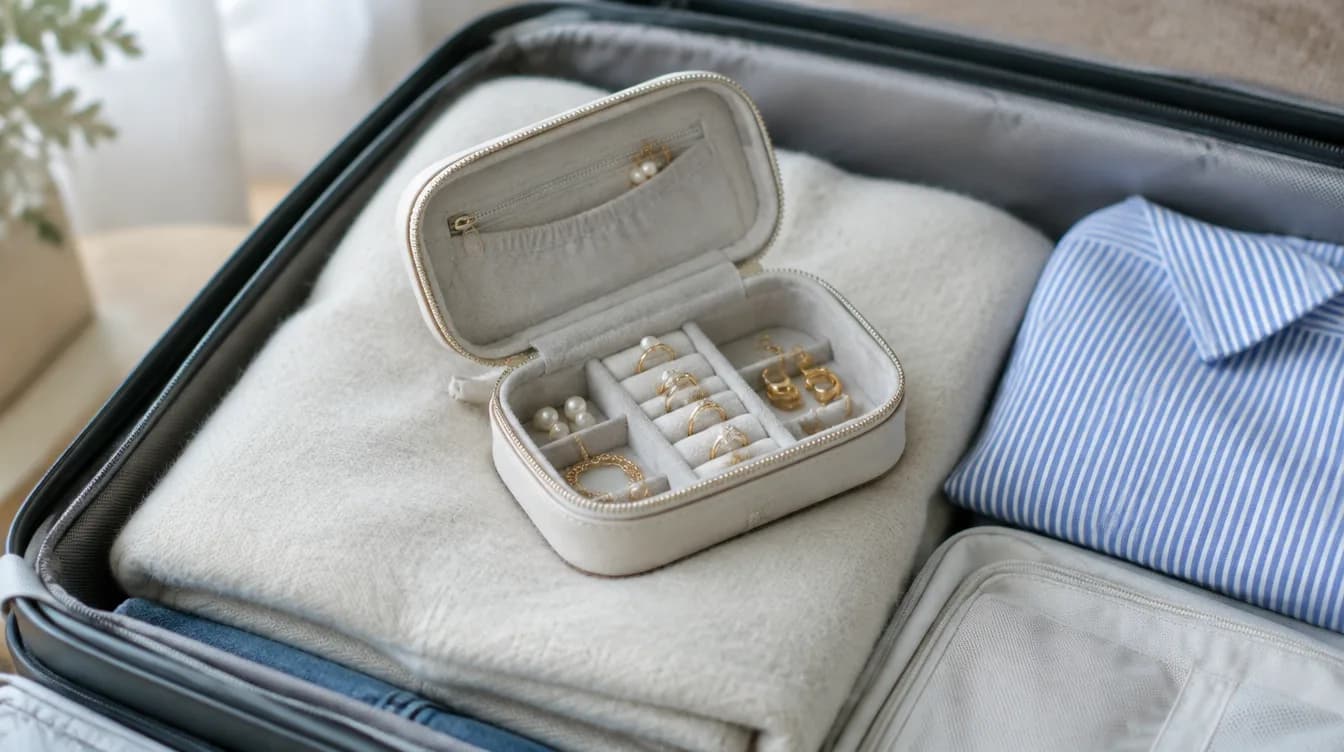
Travel is where most of the damage that shows up later actually happens — jewellery loose in a wash bag, a suitcase pocket, or wrapped in tissue that offers no real protection. Blue Nile's guidance for packing translates well to a single habit: "Use specialized storage, like a jewelry travel case," and "secure chains on necklaces and bracelets to avoid tangling" before they go anywhere (Blue Nile, n.d.). A soft-lined travel case with individual slots does for a suitcase what a jewellery box does at home — keeping pieces from touching, shifting, or catching on one another in transit.
For anything of real value, keep the piece in a carry-on rather than checked luggage, and in its original box or pouch where that's practical — small enough to sit in a bag without adding bulk, and already sized to protect the piece it was made for.
A Simple Routine Worth Keeping
Most of what damages stored jewellery happens in the gap between taking it off and actually putting it away — left on a bathroom shelf overnight, a bedside table, or a handbag pocket for weeks at a time. A short, consistent routine avoids nearly all of it:
Put it away the same day. A piece left out overnight is exposed to whatever humidity, dust, or perfume happens to be in the room — put it back in its box or pouch once it's off, rather than later.
Wipe before storing. A soft, lint-free cloth removes the light residue from skin, lotion, or perfume that can dull a stone's brilliance or a metal's finish over time.
Keep it out of the bathroom. Steam and humidity make a bathroom cabinet one of the least suitable places to keep fine jewellery, however convenient it is by the mirror.
Check in on stored pieces occasionally. A piece that isn't worn often still benefits from being taken out, looked over, and returned to a dry box every so often, rather than left untouched for years.
A Little Care, Consistently Applied
None of this asks for anything elaborate — a soft-lined box, a little distance between pieces, and a dry, steady spot away from direct light and heat cover most of what fine jewellery needs to stay as it was made. The habits are small enough to keep without thinking about them, which is really the point: a piece that's cared for this way should still look considered in twenty years, not just on the day it arrived.
If you'd like guidance specific to a stone or setting, or you're not quite sure how best to store a piece you already own, book a complimentary consultation and a jeweller will talk it through with you — no pressure, no obligation. The Education section carries the same straightforward approach applied to certification, the 4Cs, and the difference between lab-grown and mined stones, for anyone who'd like to read further before their next piece.
Frequently Asked Questions
What is the best way to store fine jewellery at home?
Keep each piece in its own soft-lined box, pouch, or compartment so it never touches another piece, in a cool, dry spot away from direct sunlight and humidity. The box or pouch a piece arrives in is usually sufficient on its own.
Does humidity actually damage jewellery?
It can. Moisture in the air contributes to tarnish and can dull a metal's polish over time, which is a real consideration in humid climates such as Japan, where summer humidity in Tokyo averages around 76 percent. Storing jewellery in a dry, air-conditioned space, or with a silica gel packet in the box during humid months, helps prevent this.
How do I stop necklaces and chains from tangling in storage?
Store each chain in its own compartment or pouch, with its clasp fastened, and enough space that it isn't touching another piece. Tangling happens almost entirely because chains are stored loose together, not because of the chain itself.
Should I pack fine jewellery in checked luggage when travelling?
It's best kept in carry-on luggage, inside a soft travel case or its original box, rather than in checked luggage where it can shift, get lost, or press against other items.
How often should stored jewellery be checked on?
Every few months is a reasonable habit, even for pieces worn rarely — enough to notice any change in tarnish or condition early, and to confirm settings and clasps are still secure.
Theo Lindqvist
Writes about stones, for Aurea
Theo answers the questions people ask before they buy — about origin, certification, and what a stone actually is. He'd rather a piece read plainly than impressively.
Everyday Wear vs Special Occasion Jewellery | Aurea
A calm, evidence-based guide to what fine jewellery can handle every day, and the moments worth removing it for: sport, swimming, cleaning, and cosmetics.
Fine Jewellery Warranty and Care Explained | Aurea
A calm guide to how fine jewellery warranties work, why your certificate and receipt matter, and how Aurea supports your piece long after it arrives.
Is a Lab-Grown Diamond a Real Diamond? The Honest Answer
Same carbon, same hardness, same fire. See what the FTC, GIA, and IGI actually say about lab-grown diamonds, and why Aurea sets only grown, certified stones.