
Behind the Craft
We Are Jewellers, Not Just Sellers | Aurea
Aurea on why we make fine jewellery to order, not sell it off a shelf: craft over churn, guidance over pressure, and a direct bond with the wearer.
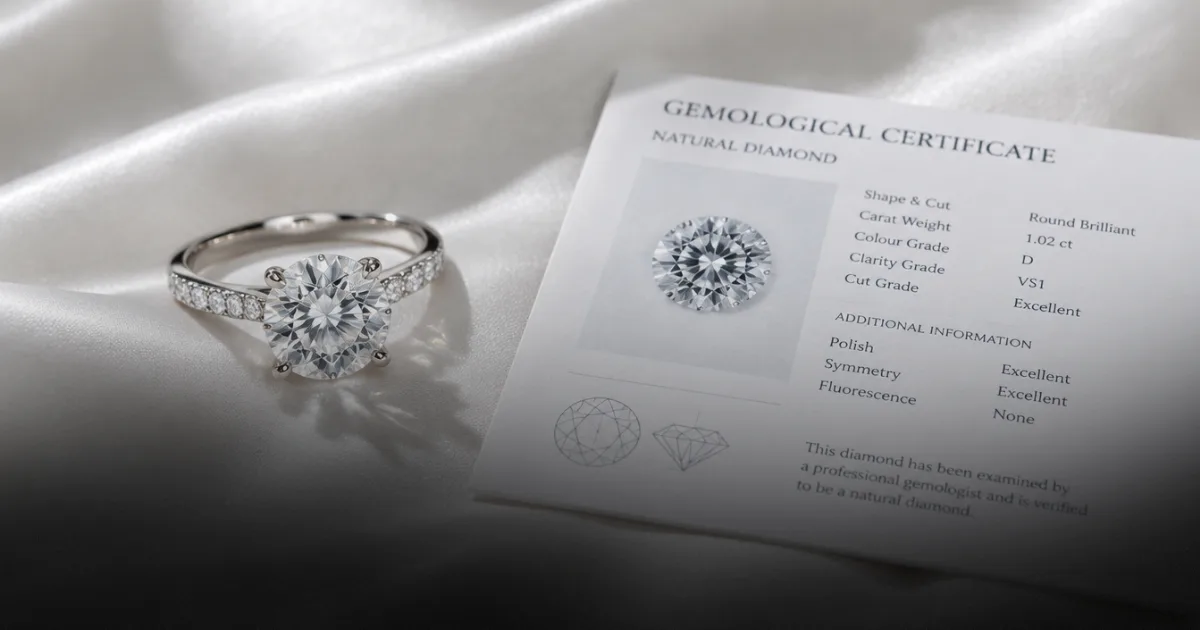
There is a line we return to often inside Aurea, not because it reads well on a wall, but because it is the question every decision has to answer: are we behaving like jewellers, or like sellers who happen to sell jewellery? The difference sounds narrow. In practice, it shapes nearly everything we do — what we make, when we make it, how we speak to the person who will wear it, and what we are willing to decline.
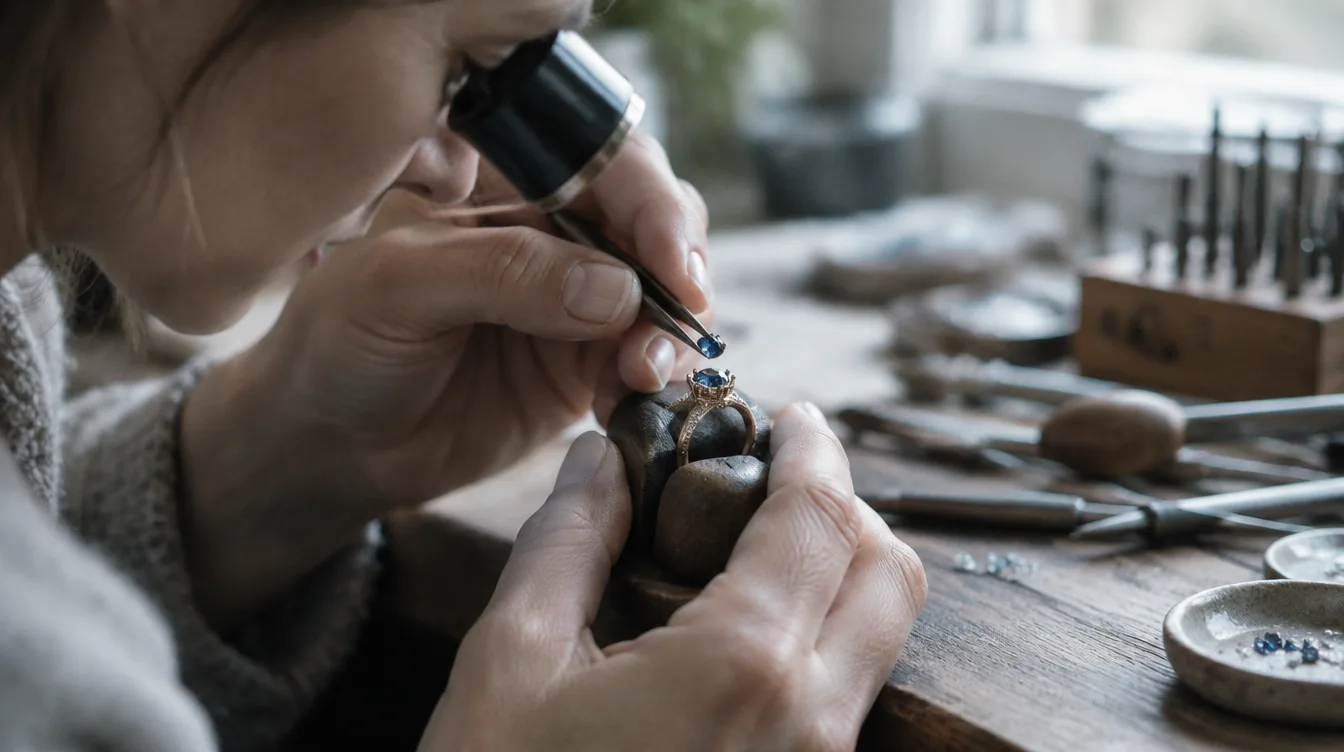
A seller's task is to move stock. Ours is to make something worth keeping.
We don't keep stock, because we don't sell stock
Most fine jewellery is finished long before anyone has asked for it — cut, set, polished, and placed in a case to wait for a buyer. We work the other way round. Nothing at Aurea is made until someone has chosen it. A piece leaves our workshop in Singapore roughly twenty days after it is ordered, then is dispatched and tracked to wherever it is going, including Japan, where most of the people we make for live.
This is not a supply-chain efficiency we take pride in for its own sake. It is closer to how jewellers worked before “jewellery” became an industry with shelves to fill: someone came to you with an occasion, a stone in mind, a hand to fit, and you made the piece for them — not from a shelf, but to order. Made-to-order is slower. It also means we cannot discount something because it failed to sell, since nothing sits around unsold in the first place. That is rather the point. A piece made for no one in particular is already a small compromise. We would rather make fewer pieces and mean each one.
Craft over churn
Because we don't hold stock, we also don't chase range for its own sake. Aurea currently offers thirteen styles, each in up to five stone options — a deliberate ceiling, not a beginning we intend to outgrow quickly. A wide, shallow catalogue is a seller's instinct: more doors into a sale. A narrow, considered one is a jeweller's instinct: fewer things, made properly, each one earning its place.
The same discipline applies to the stones themselves. Every diamond and every coloured gemstone we set is grown, not mined — chemically and structurally identical to their mined counterparts, graded on the same scale, certified by the same laboratories. We do not treat lab-grown as the affordable understudy sitting beneath something more “real.” Colour is the choice; origin is not a hierarchy. We also know some people still hear “lab-grown” and picture something synthetic or lesser. That scepticism is understandable, given how loosely the word has sometimes been used elsewhere, and we would rather answer it plainly — in our Education pages, and in conversation — than pretend the question never comes up.
Guidance, not pressure
A seller wants a decision today. A jeweller wants the right decision, whenever it arrives.
Fine jewellery bought without seeing or holding it first asks for a kind of trust that a shop window used to provide automatically. We try to earn that trust a different way: a complimentary consultation with no obligation attached, a wishlist where saved pieces do not expire or get quietly reserved for somebody else, and the choice to reserve a piece with a deposit rather than be rushed into deciding on the spot. None of this is built to close a sale faster. It is built to remove the reasons someone might buy the wrong piece, or buy nothing at all, simply because they felt hurried.
It also means being willing to say a piece isn't right for someone, even when a sale is a sale either way. A jeweller across a counter would tell you plainly if a stone or a setting wasn't suited to how you actually live. That's the standard we hold our consultations to as well.
A direct relationship with the wearer
We sell directly, without a chain of distributors standing between the workshop and the person wearing the piece, and that is not only a pricing decision. It means the questions people ask about a stone, a setting, or a certificate come to us, and the answers come from us too — not from a script written for a department store counter three layers removed from the workshop. Most of the people we make for are buying for themselves rather than for someone else, which changes the conversation: less “will they like it,” more “is this actually me.” We would rather have that conversation honestly than sell around it.
Five words, in order
If Aurea has a golden standard, it is built from five things we hold ourselves to, deliberately kept in this order: integrity, elegance, authenticity, transparency, craftsmanship.
Integrity comes first because it has to come before the others mean anything. Elegance is design that doesn't need to shout to be noticed — quiet, considered, built to outlast whatever happens to be fashionable this year. Authenticity is refusing to pretend a grown stone is something lesser, or that a mined one is something magical; both are real, and we say so plainly rather than letting the assumption stand. Transparency is telling you what a piece is made of, how it was made, and how long that takes, before you have to ask. And craftsmanship is the part that rarely shows up in a sentence at all — it's in how a claw is set, how a stone is angled to catch light, and how a piece wears ten years from now, not only on the day it arrives.
Ethically beautiful, not a slogan
We started Aurea on the belief that fine jewellery shouldn't have to choose between beautiful and honest. Grown instead of mined. Made only once it's asked for, so nothing is wasted and nothing is guessed at in advance. Designed to be worn for a long time, not replaced next season. None of that makes for a louder sale. It makes for a piece we are willing to put our name to, and a relationship with the person wearing it that does not end at checkout.
That, in the end, is the difference between selling and making. A seller's job finishes at the sale. A jeweller's does not.

If you are deciding what is right for you, we would welcome the conversation — book a complimentary consultation and a jeweller will talk it through, with no obligation. Or take a slower route in first: explore our Education pages, or browse the collection at your own pace.
Mira Oduya
What ‘Ethically Beautiful’ Really Means | Aurea
What “ethically beautiful” means at Aurea: stones grown not mined, pieces made only once ordered, design built to outlast trends.
Aurea Means Gold — and a Golden Standard
The story behind the Aurea name: a golden standard for how fine jewellery is grown, certified, made to order, and designed to outlast trends.
From Sketch to Hand: How an Aurea Piece Is Made | Aurea
Follow an Aurea piece from first sketch and certified stone to hand-set bench work and tracked dispatch from Singapore, made only once it's ordered.