
Gifting
Gifting Fine Jewellery for Life's Milestones | Aurea
A calm guide to gifting fine jewellery for anniversaries, milestone birthdays, Mother's Day and graduations, tuned to Japanese gift-giving custom.
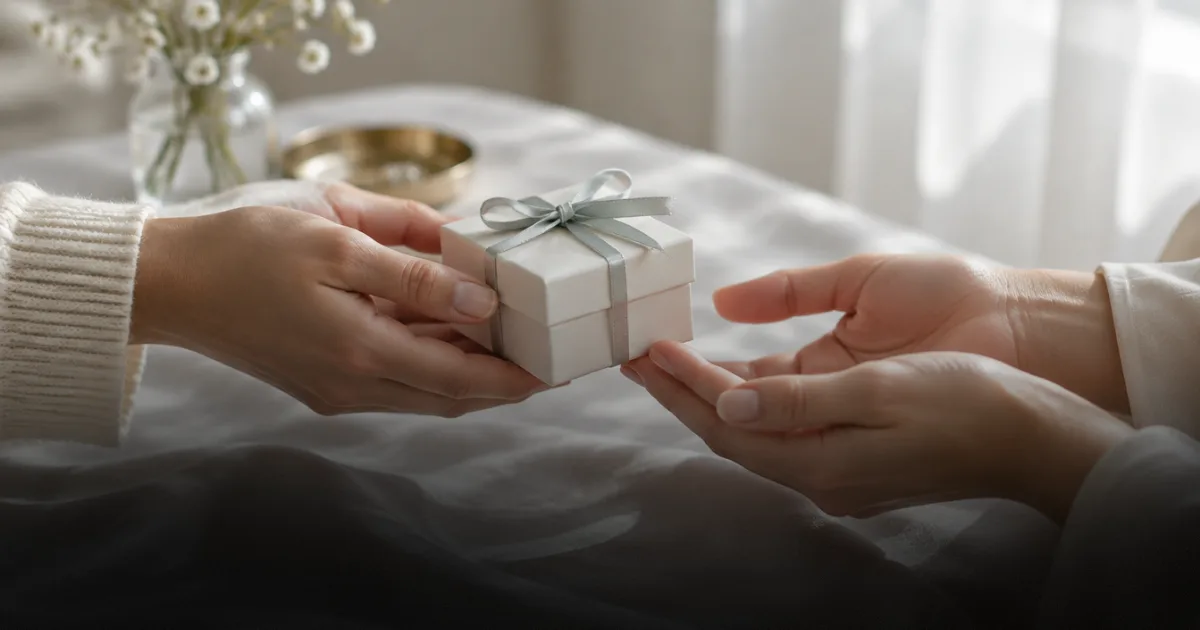
Some gifts mark a date on the calendar. Others mark a life. Fine jewellery tends to belong to the second kind — chosen once, worn for years, quietly present long after the occasion that prompted it has passed. That is part of why it remains one of the most considered gifts to give at the moments that matter most: an anniversary, a milestone birthday, Mother's Day, a graduation, or the start of something new.
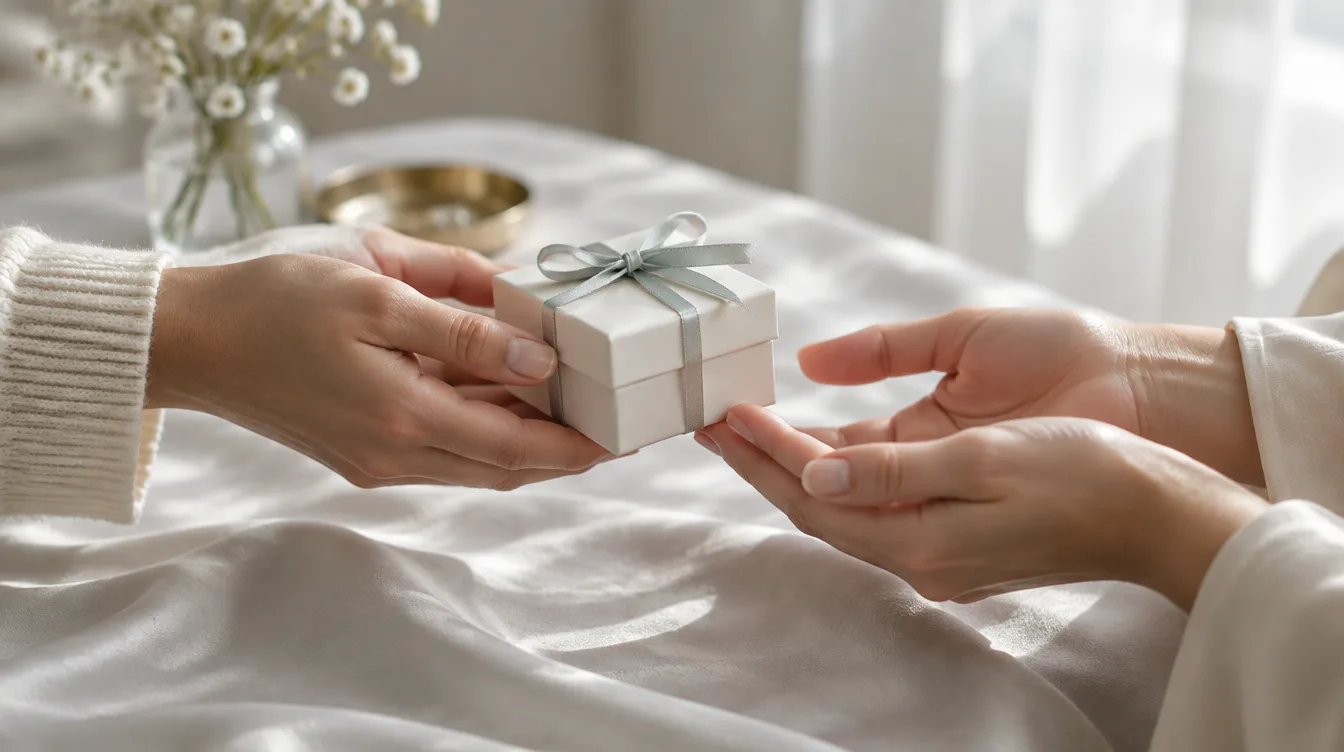
At Aurea, gifting is not a separate category from buying for yourself. The same standard applies either way — a piece that is grown and certified, made only once it is ordered, and designed to be worn rather than admired from inside a box. What changes, when a piece is meant for someone else, is the thought that goes into choosing it, and, for many of our customers in Japan, the care that goes into giving it well.
Why Jewellery Carries Meaning Differently
Most gifts are used, worn out, or eventually replaced. Fine jewellery is one of the few things we give that is built to remain — worn to mark the day it was given, and then simply worn again, on ordinary days, for years afterwards. That permanence is part of what makes it feel significant, and it is also why care in the choosing matters more than scale. A pendant or a pair of earrings picked with real thought for the person receiving it says more than a grander piece chosen in a hurry.
Reading the Moment
Different occasions call for different kinds of jewellery gifts — not different in value, but in tone.
Anniversaries. Marking a wedding anniversary with a gift is a comparatively recent custom in Japan, tracing back to Emperor Meiji's Silver Wedding Anniversary celebration at the Imperial Palace in 1894 (Kokoro Care). Since then, Japanese couples have broadly followed the same milestone-year structure familiar in the West — paper for the first year, silver at twenty-five, pearl at thirty, ruby at forty, gold at fifty, diamond at sixty (Kokoro Care). A piece that nods to the year's traditional material, or simply a design you have both long admired, works well — what matters is that it was chosen with that particular year, and that particular person, in mind.
Milestone birthdays. Japan has its own framework for marking certain birthdays as significant. Kanreki, the sixtieth birthday, celebrates the completion of a sixty-year zodiac cycle — a symbolic return to the year of one's birth — traditionally marked with the colour red, historically a red vest and cap and, more often today, a red accessory of the recipient's own choosing (Cogley). Seijin-shiki, Coming of Age Day, marks entry into adulthood on the second Monday of January each year, observed with formal dress and, in many municipalities, small commemorative gifts (Nippon.com, “Seijinshiki”). Both occasions reward a piece that feels like a beginning — one to keep wearing into the next chapter, not simply admire on the day itself.
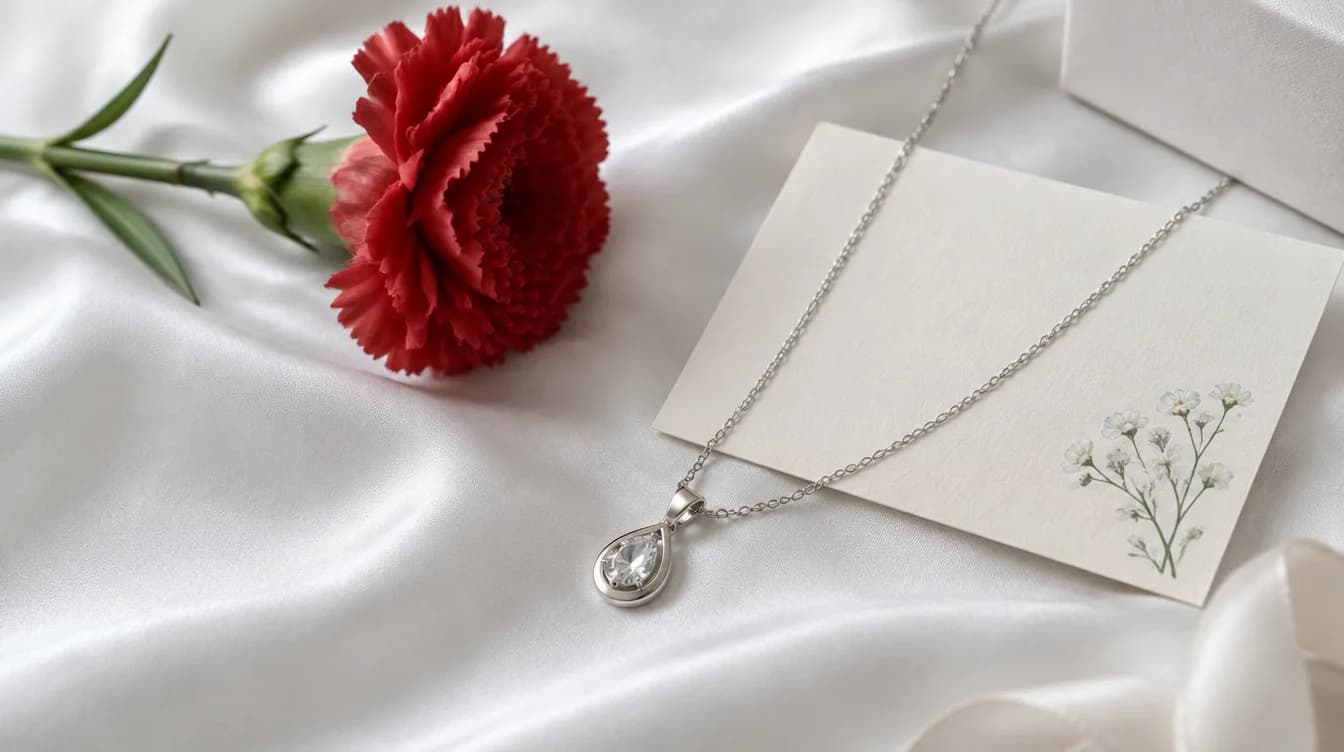
Mother's Day. Haha no Hi falls on the second Sunday in May in Japan, the same date as in much of the West, a custom that returned after the Second World War having first arrived through Christian missionaries earlier in the twentieth century (Dress Your Color). Red carnations remain the most recognisable gift, but jewellery makes a natural extension of the same sentiment — worn rather than displayed, a quiet daily reminder rather than a bouquet that fades.
Graduations and new beginnings. A graduation, a first job, a move to a new city — these moments mark a threshold rather than a return, and a gift for them can lean forward. A clean, wearable piece, simple enough to reach for on the first day of the next thing, suits a beginning better than something ornate — one the recipient will build a habit of wearing, not set aside for rare occasions.
Giving Thoughtfully, the Japanese Way
Gift-giving in Japan carries its own quiet grammar, and getting the small things right often matters as much as the gift itself. A few points worth knowing, whatever you choose to give.
The gesture matters more than the price. Japan's tradition of seasonal gift-giving, rooted in the mid-year chugen and year-end seibo customs, exists to express gratitude and maintain relationships rather than to impress (Nippon.com, “The Social Custom of Gift Giving”). As one guide to the custom puts it, the “utility or the pleasure a gift will give the recipient” should guide the choice more than expense or spectacle (Nippon.com, “The Social Custom of Gift Giving”). A piece the recipient will actually reach for says more than a piece chosen to be noticed.
A few items are best avoided — though not jewellery. Japanese gift etiquette flags certain items as carrying unwelcome associations: sharp objects such as knives or scissors can suggest “cutting ties,” and gifts in sets of four are generally avoided, since the word for four is a homonym for death (Nippon.com, “Gift-Giving Etiquette in Japan”). Jewellery sidesteps these concerns entirely, though it is a useful reminder that presentation and thoughtfulness are read as closely as the gift itself.
Presentation is part of the gift. Wrapping, timing, and the manner of giving are treated with real care in Japan — one more reason to choose a piece you feel confident about ahead of the occasion, rather than deciding under pressure at the last moment.
None of this is a rulebook to follow anxiously. It is simply a reminder that, in a culture where gestures are read closely, a well-chosen piece of jewellery already says a great deal without needing to say more.
Choosing a Piece That Carries Meaning
A gift of jewellery works best when it reflects the person receiving it, not only the occasion. A few questions worth asking before you choose.
What is the person like, day to day. A piece they will actually reach for, matched to how they already dress, means more over time than a piece chosen for the moment alone. Aurea's Find Your Piece quiz was built for this — five short questions on occasion, personality, and how a piece will actually be worn, returning a shortlist worth a closer look.
Consider whether the occasion calls for one piece, or a set. For an anniversary or a milestone birthday, pairing a pendant with a bracelet or earrings through Build Your Set gives a single, complete gift made together, so the stones and metal match.
Consider letting them choose, with your help. Where size or stone preference matters, the kindest gift is the means to choose well: a piece saved to their Wishlist as the start of a conversation.
If you would rather talk it through, ask. Booking a Consultation puts you in conversation with a jeweller who can help you think through stone, style, and occasion together — complimentary and unhurried, not a sales pitch.
Every Aurea piece is made only once it is ordered — grown, certified, and crafted to order in Singapore, then dispatched with tracking to Japan and worldwide. A gift bought today is made specifically for the person and the moment it is meant for, not pulled ready-made from a shelf.
Worn Long After the Occasion
The best gifts do not announce themselves. They sit quietly in a life, worn on the days that matter and the ordinary days in between, carrying their meaning without needing to explain it. That is the standard we hold every Aurea piece to, whether it is chosen for yourself or for someone whose milestone you want to mark properly.
If you are choosing a piece for someone's anniversary, milestone birthday, or next chapter, Find Your Piece is a considered place to start, and a Consultation is there if you would rather talk it through with a jeweller directly.
Frequently Asked Questions
Is fine jewellery an appropriate gift in Japan?
Yes. Jewellery avoids the small taboos attached to certain other gifts in Japan, such as sharp objects or sets of four, and its lasting nature suits a culture where gestures are read closely.
What jewellery makes a meaningful anniversary gift?
A piece that reflects the specific year and the person. Japan broadly follows the same milestone-year materials as the West — silver at twenty-five, pearl at thirty, ruby at forty, gold at fifty, diamond at sixty — which can guide the choice of stone or design.
What is a thoughtful gift for a kanreki, or 60th birthday, in Japan?
Kanreki is traditionally marked with the colour red, historically a red vest and cap and, today, more often a red accessory of the recipient's own choosing — a piece in a warm red stone fits the spirit of the occasion well.
What is given as a gift for Mother's Day in Japan?
Red carnations remain the most traditional gift for Haha no Hi, the second Sunday in May, though jewellery makes a natural complement — something worn daily rather than a gift that fades.
How do I choose a piece of jewellery to give as a gift?
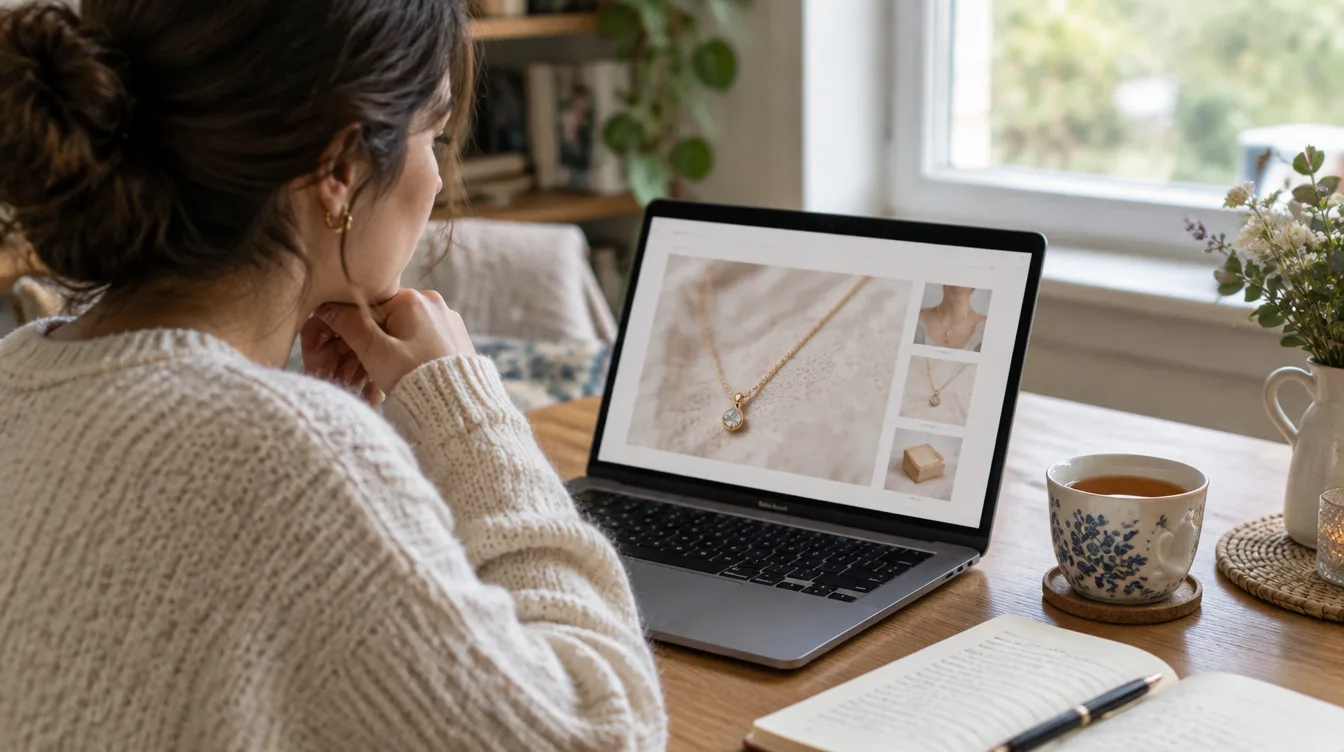
Start with how the person actually dresses and lives, not the occasion alone. Find Your Piece narrows the collection to a short, relevant list, and a complimentary Consultation is available if you would like to think it through with a jeweller directly.
Sasha Verlaine
The Quiet Joy of Buying Jewellery for Yourself | Aurea
A reflective Aurea journal piece on buying fine jewellery for yourself — no occasion needed, just a piece chosen to mark who you are now.
The 4Cs, Explained Simply: Cut, Colour, Clarity, and Carat
A clear, calm guide to the 4Cs of diamonds — cut, colour, clarity, and carat — and how they apply equally to lab-grown stones. From Aurea.
How to Find Your Ring Size at Home
A calm, practical guide to measuring your ring size at home using string, paper, or a ring you own — plus how Japanese sizing differs.